ALL politics in this country are dress rehearsal for civil war.
- Billy Beck
Tuesday, February 24, 2015


Tuesday, February 10, 2015
The Epochal Consequences Of Woodrow Wilson’s War by David Stockman
Found at: David Stockman's Corner
The Epochal Consequences Of Woodrow Wilson’s War
Remarks by David Stockman
Committee for the Republic
Washington DC January 20, 2015
My humble thesis tonight is that the entire 20th Century was a giant mistake.
And that you can put the blame for this monumental error squarely on Thomas Woodrow Wilson——-a megalomaniacal madman who was the very worst President in American history……..well, except for the last two.
His unforgiveable error was to put the United States into the Great War for utterly no good reason of national interest. The European war posed not an iota of threat to the safety and security of the citizens of Lincoln NE, or Worcester MA or Sacramento CA. In that respect, Wilson’s putative defense of “freedom of the seas” and the rights of neutrals was an empty shibboleth; his call to make the world safe for democracy, a preposterous pipe dream.
Actually, his thinly veiled reason for plunging the US into the cauldron of the Great War was to obtain a seat at the peace conference table——so that he could remake the world in response to god’s calling.
But this was a world about which he was blatantly ignorant; a task for which he was temperamentally unsuited; and an utter chimera based on 14 points that were so abstractly devoid of substance as to constitute mental play dough.
Or, as his alter-ego and sycophant, Colonel House, put it: Intervention positioned Wilson to play “The noblest part that has ever come to the son of man”. America thus plunged into Europe’s carnage, and forevermore shed its century-long Republican tradition of anti-militarism and non-intervention in the quarrels of the Old World.
Needless to say, there was absolutely nothing noble that came of Wilson’s intervention. It led to a peace of vengeful victors, triumphant nationalists and avaricious imperialists—-when the war would have otherwise ended in a bedraggled peace of mutually exhausted bankrupts and discredited war parties on both sides.
By so altering the course of history, Wilson’s war bankrupted Europe and midwifed 20th century totalitarianism in Russia and Germany.
These developments, in turn, eventually led to the Great Depression, the Welfare State and Keynesian economics, World War II, the holocaust, the Cold War, the permanent Warfare State and its military-industrial complex.
They also spawned Nixon’s 1971 destruction of sound money, Reagan’s failure to tame Big Government and Greenspan’s destructive cult of monetary central planning.
So, too, flowed the Bush’s wars of intervention and occupation, their fatal blow to the failed states in the lands of Islam foolishly created by the imperialist map-makers at Versailles and the resulting endless waves of blowback and terrorism now afflicting the world.
And not the least of the ills begotten in Wilson’s war is the modern rogue regime of central bank money printing, and the Bernanke-Yellen plague of bubble economics which never stops showering the 1% with the monumental windfalls from central bank enabled speculation.
Consider the building blocks of that lamentable edifice.
First, had the war ended in 1917 by a mutual withdrawal from the utterly stalemated trenches of the Western Front, as it was destined to, there would have been no disastrous summer offensive by the Kerensky government, or subsequent massive mutiny in Petrograd that enabled Lenin’s flukish seizure of power in November. That is, the 20th century would not have been saddled with a Stalinist nightmare or with a Soviet state that poisoned the peace of nations for 75 years, while the nuclear sword of Damocles hung over the planet.
Likewise, there would have been no abomination known as the Versailles peace treaty; no “stab in the back” legends owing to the Weimar government’s forced signing of the “war guilt” clause; no continuance of England’s brutal post-armistice blockade that delivered Germany’s women and children into starvation and death and left a demobilized 3-million man army destitute, bitter and on a permanent political rampage of vengeance.
So too, there would have been no acquiescence in the dismemberment of Germany and the spreading of its parts and pieces to Poland, Czechoslovakia, Denmark, France, Austria and Italy—–with the consequent revanchist agitation that nourished the Nazi’s with patriotic public support in the rump of the fatherland.
Nor would there have materialized the French occupation of the Ruhr and the war reparations crisis that led to the destruction of the German middle class in the 1923 hyperinflation; and, finally, the history books would have never recorded the Hitlerian ascent to power and all the evils that flowed thereupon.
In short, on the approximate 100th anniversary of Sarajevo, the world has been turned upside down.
The war of victors made possible by Woodrow Wilson destroyed the liberal international economic order—that is, honest money, relatively free trade, rising international capital flows and rapidly growing global economic integration—-which had blossomed during the 40-year span between 1870 and 1914.
That golden age had brought rising living standards, stable prices, massive capital investment, prolific technological progress and pacific relations among the major nations——a condition that was never equaled, either before or since.
Now, owing to Wilson’s fetid patrimony, we have the opposite: A world of the Warfare State, the Welfare State, Central Bank omnipotence and a crushing burden of private and public debts. That is, a thoroughgoing statist regime that is fundamentally inimical to capitalist prosperity, free market governance of economic life and the flourishing of private liberty and constitutional safeguards against the encroachments of the state.
So Wilson has a lot to answer for—-and my allotted 30 minutes can hardly accommodate the full extent of the indictment. But let me try to summarize his own “war guilt” in eight major propositions——a couple of which my give rise to a disagreement or two.
Proposition #1: Starting with the generic context——the Great War was about nothing worth dying for and engaged no recognizable principle of human betterment. There were many blackish hats, but no white ones.
Instead, it was an avoidable calamity issuing from a cacophony of political incompetence, cowardice, avarice and tomfoolery.
Blame the bombastic and impetuous Kaiser Wilhelm for setting the stage with his foolish dismissal of Bismarck in 1890, failure to renew the Russian reinsurance treaty shortly thereafter and his quixotic build-up of the German Navy after the turn of the century.
Blame the French for lashing themselves to a war declaration that could be triggered by the intrigues of a decadent court in St. Petersburg where the Czar still claimed divine rights and the Czarina ruled behind the scenes on the hideous advice of Rasputin.
Likewise, censure Russia’s foreign minister Sazonov for his delusions of greater Slavic grandeur that had encouraged Serbia’s provocations after Sarajevo; and castigate the doddering emperor Franz Joseph for hanging onto power into his 67th year on the throne and thereby leaving his crumbling empire vulnerable to the suicidal impulses of General Conrad’s war party.
So too, indict the duplicitous German Chancellor, Bethmann-Hollweg, for allowing the Austrians to believe that the Kaiser endorsed their declaration of war on Serbia; and pillory Winston Churchill and London’s war party for failing to recognize that the Schlieffen Plan’s invasion through Belgium was no threat to England, but a unavoidable German defense against a two-front war.
But after all that—- most especially don’t talk about the defense of democracy, the vindication of liberalism or the thwarting of Prussian autocracy and militarism.
The British War party led by the likes of Churchill and Kitchener was all about the glory of empire, not the vindication of democracy; France’ principal war aim was the revanchist drive to recover Alsace-Lorrain—–mainly a German speaking territory for 600 years until it was conquered by Louis XIV.
In any event, German autocracy was already on its last leg as betokened by the arrival of universal social insurance and the election of a socialist-liberal majority in the Reichstag on the eve of the war; and the Austro-Hungarian, Balkan and Ottoman goulash of nationalities, respectively, would have erupted in interminable regional conflicts, regardless of who won the Great War.
In short, nothing of principle or higher morality was at stake in the outcome.
Proposition # 2: The war posed no national security threat whatsoever to the US. Presumably, of course, the danger was not the Entente powers—but Germany and its allies.
But how so? After the Schlieffen Plan offensive failed on September 11, 1914, the German Army became incarcerated in a bloody, bankrupting, two-front land war that ensured its inexorable demise. Likewise, after the battle of Jutland in May 1916, the great German surface fleet was bottled up in its homeports—-an inert flotilla of steel that posed no threat to the American coast 4,000 miles away.
As for the rest of the central powers, the Ottoman and Hapsburg empires already had an appointment with the dustbin of history. Need we even bother with the fourth member—-that is, Bulgaria?
Proposition #3: Wilson’s pretexts for war on Germany—–submarine warfare and the Zimmerman telegram—-are not half what they are cracked-up to be by Warfare State historians.
As to the so-called freedom of the seas and neutral shipping rights, the story is blatantly simple. In November 1914, England declared the North Sea to be a “war zone”; threatened neutral shipping with deadly sea mines; declared that anything which could conceivably be of use to the German army—directly or indirectly—-to be contraband that would be seized or destroyed; and announced that the resulting blockade of German ports was designed to starve it into submission.
A few months later, Germany announced its submarine warfare policy designed to the stem the flow of food, raw materials and armaments to England in retaliation. It was the desperate antidote of a land power to England’s crushing sea-borne blockade.
Accordingly, there existed a state of total warfare in the northern European waters—-and the traditional “rights” of neutrals were irrelevant and disregarded by both sides. In arming merchantmen and stowing munitions on passenger liners, England was hypocritical and utterly cavalier about the resulting mortal danger to innocent civilians—–as exemplified by the 4.3 million rifle cartridges and hundreds of tons of other munitions carried in the hull of the Lusitania.
Likewise, German resort to so-called “unrestricted submarine warfare” in February 1917 was brutal and stupid, but came in response to massive domestic political pressure during what was known as the “turnip winter” in Germany. By then, the country was starving from the English blockade—literally.
Before he resigned on principle in June 1915, Secretary William Jennings Bryan got it right. Had he been less diplomatic he would have said never should American boys be crucified on the cross of Cunard liner state room so that a few thousand wealthy plutocrat could exercise a putative “right” to wallow in luxury while knowingly cruising into in harm’s way.
As to the Zimmerman telegram, it was never delivered to Mexico, but was sent from Berlin as an internal diplomatic communique to the German ambassador in Washington, who had labored mightily to keep his country out of war with the US, and was intercepted by British intelligence, which sat on it for more than a month waiting for an opportune moment to incite America into war hysteria.
In fact, this so-called bombshell was actually just an internal foreign ministry rumination about a possible plan to approach the Mexican president regarding an alliance in the event that the US first went to war with Germany.
Why is this surprising or a casus belli? Did not the entente bribe Italy into the war with promises of large chunks of Austria? Did not the hapless Rumanians finally join the entente when they were promised Transylvania? Did not the Greeks bargain endlessly over the Turkish territories they were to be awarded for joining the allies? Did not Lawrence of Arabia bribe the Sherif of Mecca with the promise of vast Arabian lands to be extracted from the Turks?
Why, then, would the German’s—-if at war with the USA—- not promise the return of Texas?
Proposition #4: Europe had expected a short war, and actually got one when the Schlieffen plan offensive bogged down 30 miles outside of Paris on the Marne River in mid-September 1914. Within three months, the Western Front had formed and coagulated into blood and mud——a ghastly 400 mile corridor of senseless carnage, unspeakable slaughter and incessant military stupidity that stretched from the Flanders coast across Belgium and northern France to the Swiss frontier.
The next four years witnessed an undulating line of trenches, barbed wire entanglements, tunnels, artillery emplacements and shell-pocked scorched earth that rarely moved more than a few miles in either direction, and which ultimately claimed more than 4 million casualties on the Allied side and 3.5 million on the German side.
If there was any doubt that Wilson’s catastrophic intervention converted a war of attrition, stalemate and eventual mutual exhaustion into Pyrrhic victory for the allies, it was memorialized in four developments during 1916.
In the first, the Germans wagered everything on a massive offensive designed to overrun the fortresses of Verdun——the historic defensive battlements on France’s northeast border that had stood since Roman times, and which had been massively reinforced after the France’s humiliating defeat in Franco-Prussian War of 1870.
But notwithstanding the mobilization of 100 divisions, the greatest artillery bombardment campaign every recorded until then, and repeated infantry offensives from February through November that resulted in upwards of 400,000 German casualties, the Verdun offensive failed.
The second event was its mirror image—-the massive British and French offensive known as the battle of the Somme, which commenced with equally destructive artillery barrages on July 1, 1916 and then for three month sent waves of infantry into the maws of German machine guns and artillery. It too ended in colossal failure, but only after more than 600,000 English and French casualties including a quarter million dead.
In between these bloodbaths, the stalemate was reinforced by the naval showdown at Jutland that cost the British far more sunken ships and drowned sailors than the Germans, but also caused the Germans to retire their surface fleet to port and never again challenge the Royal Navy in open water combat.
Finally, by year-end 1916 the German generals who had destroyed the Russian armies in the East with only a tiny one-ninth fraction of the German army—Generals Hindenburg and Ludendorff —were given command of the Western Front. Presently, they radically changed Germany’s war strategy by recognizing that the growing allied superiority in manpower, owing to the British homeland draft of 1916 and mobilization of forces from throughout the empire, made a German offensive breakthrough will nigh impossible.
The result was the Hindenburg Line—a military marvel based on a checkerboard array of hardened pillbox machine gunners and maneuver forces rather than mass infantry on the front lines, and an intricate labyrinth of highly engineered tunnels, deep earth shelters, rail connections, heavy artillery and flexible reserves in the rear. It was also augmented by the transfer of Germany’s eastern armies to the western front—-giving it 200 divisions and 4 million men on the Hindenburg Line.
This precluded any hope of Entente victory. By 1917 there were not enough able-bodied draft age men left in France and England to overcome the Hindenburg Line, which, in turn, was designed to bleed white the entente armies led by butchers like Generals Haig and Joffre until their governments sued for peace.
Thus, with the Russian army’s disintegration in the east and the stalemate frozen indefinitely in the west by early 1917, it was only a matter of months before mutinies among the French lines, demoralization in London, mass starvation and privation in Germany and bankruptcy all around would have led to a peace of exhaustion and a European-wide political revolt against the war makers.
Wilson’s intervention thus did not remake the world. But it did radically re-channel the contours of 20th century history. And, as they say, not in a good way.
Proposition #5: Wilson’s epochal error not only produced the abomination of Versailles and all its progeny, but also the transformation of the Federal Reserve from a passive “banker’s bank” to an interventionist central bank knee-deep in Wall Street, government finance and macroeconomic management.
This, too, was a crucial historical hinge point because Carter Glass’ 1913 act forbid the new Reserve banks to even own government bonds; empowered them only to passively discount for cash good commercial credits and receivables brought to the rediscount window by member banks; and contemplated no open market interventions in debt markets or any remit with respect to GDP growth, jobs, inflation, housing or all the rest of modern day monetary central planning targets.
In fact, Carter Glass’ “banker’s bank” didn’t care whether the growth rate was positive 4%, negative 4% or anything in-between; its modest job was to channel liquidity into the banking system in response to the ebb and flow of commerce and production.
Jobs, growth and prosperity were to remain the unplanned outcome of millions of producers, consumers, investors, savers, entrepreneurs and speculators operating on the free market, not the business of the state.
But Wilson’s war took the national debt from about $1 billion or $11 per capita—–a level which had been maintained since the Battle of Gettysburg—-to $27 billion, including upwards of $10 billion re-loaned to the allies to enable them to continue the war. There is not a chance that this massive eruption of Federal borrowing could have been financed out of domestic savings in the private market.
So the Fed charter was changed owing to the exigencies of war to permit it to own government debt and to discount private loans collateralized by Treasury paper.
In due course, the famous and massive Liberty Bond drives became a glorified Ponzi scheme. Patriotic Americans borrowed money from their banks and pledged their war bonds; the banks borrowed money from the Fed, and re-pledged their customer’s collateral. The Reserve banks, in turn, created the billions they loaned to the commercial banks out of thin air, thereby pegging interest rates low for the duration of the war.
When Wilson was done saving the world, America had an interventionist central bank schooled in the art of interest rate pegging and rampant expansion of fiat credit not anchored in the real bills of commerce and trade; and its incipient Warfare and Welfare states had an agency of public debt monetization that could permit massive government spending without the inconvenience of high taxes on the people or the crowding out of business investment by high interest rates on the private market for savings.
Proposition # 6: By prolonging the war and massively increasing the level of debt and money printing on all sides, Wilson’s folly prevented a proper post-war resumption of the classical gold standard at the pre-war parities.
This failure of resumption, in turn, paved the way for the breakdown of monetary order and world trade in 1931—–a break which turned a standard post-war economic cleansing into the Great Depression, and a decade of protectionism, beggar-thy-neighbor currency manipulation and ultimately rearmament and statist dirigisme.
In essence, the English and French governments had raised billions from their citizens on the solemn promise that it would be repaid at the pre-war parities; that the war bonds were money good in gold.
But the combatant governments had printed too much fiat currency and inflation during the war, and through domestic regimentation, heavy taxation and unfathomable combat destruction of economic life in northern France had drastically impaired their private economies.
Accordingly, under Churchill’s foolish leadership England re-pegged to gold at the old parity in 1925, but had no political will or capacity to reduce bloated war-time wages, costs and prices in a commensurate manner, or to live with the austerity and shrunken living standards that honest liquidation of its war debts required.
At the same time, France ended up betraying its war time lenders, and re-pegged the Franc two years later at a drastically depreciated level. This resulted in a spurt of beggar-thy-neighbor prosperity and the accumulation of pound sterling claims that would eventually blow-up the London money market and the sterling based “gold exchange standard” that the Bank of England and British Treasury had peddled as a poor man’s way back on gold.
Yet under this “gold lite” contraption, France, Holland, Sweden and other surplus countries accumulated huge amounts of sterling liabilities in lieu of settling their accounts in bullion—–that is, they loaned billions to the British. They did this on the promise and the confidence that the pound sterling would remain at $4.87 per dollar come hell or high water—-just as it had for 200 years of peacetime before.
But British politicians betrayed their promises and their central bank creditors September 1931 by suspending redemption and floating the pound——-shattering the parity and causing the decade-long struggle for resumption of an honest gold standard to fail. Depressionary contraction of world trade, capital flows and capitalist enterprise inherently followed.
Proposition # 7: By turning America overnight into the granary, arsenal and banker of the Entente, the US economy was distorted, bloated and deformed into a giant, but unstable and unsustainable global exporter and creditor.
During the war years, for example, US exports increased by 4X and GDP soared from $40 billion to $90 billion. Incomes and land prices soared in the farm belt, and steel, chemical, machinery, munitions and ship construction boomed like never before—–in substantial part because Uncle Sam essentially provided vendor finance to the bankrupt allies in desperate need of both military and civilian goods.
Under classic rules, there should have been a nasty correction after the war—-as the world got back to honest money and sound finance. But it didn’t happen because the newly unleashed Fed fueled an incredible boom on Wall Street and a massive junk bond market in foreign loans.
In today economic scale, the latter amounted to upwards of $2 trillion and, in effect, kept the war boom in exports and capital spending going right up until 1929. Accordingly, the great collapse of 1929-1932 was not a mysterious failure of capitalism; it was the delayed liquidation of Wilson’s war boom.
After the crash, exports and capital spending plunged by 80% when the foreign junk bond binge ended in the face of massive defaults abroad; and that, in turn, led to a traumatic liquidation of industrial inventories and a collapse of credit fueled purchases of consumer durables like refrigerators and autos. The latter, for example, dropped from 5 million to 1.5 million units per year after 1929.
Proposition # 8: In short, the Great Depression was a unique historical event owing to the vast financial deformations of the Great War——deformations which were drastically exaggerated by its prolongation from Wilson’s intervention and the massive credit expansion unleashed by the Fed and Bank of England during and after the war.
Stated differently, the trauma of the 1930s was not the result of the inherent flaws or purported cyclical instabilities of free market capitalism; it was, instead, the delayed legacy of the financial carnage of the Great War and the failed 1920s efforts to restore the liberal order of sound money, open trade and unimpeded money and capital flows.
But this trauma was thoroughly misunderstood, and therefore did give rise to the curse of Keynesian economics and did unleash the politicians to meddle in virtually every aspect of economic life, culminating in the statist and crony capitalist dystopia that has emerged in this century.
Needless to say, that is Thomas Woodrow Wilson’s worst sin of all.
The Epochal Consequences Of Woodrow Wilson’s War
Remarks by David Stockman
Committee for the Republic
Washington DC January 20, 2015
My humble thesis tonight is that the entire 20th Century was a giant mistake.
And that you can put the blame for this monumental error squarely on Thomas Woodrow Wilson——-a megalomaniacal madman who was the very worst President in American history……..well, except for the last two.
His unforgiveable error was to put the United States into the Great War for utterly no good reason of national interest. The European war posed not an iota of threat to the safety and security of the citizens of Lincoln NE, or Worcester MA or Sacramento CA. In that respect, Wilson’s putative defense of “freedom of the seas” and the rights of neutrals was an empty shibboleth; his call to make the world safe for democracy, a preposterous pipe dream.
Actually, his thinly veiled reason for plunging the US into the cauldron of the Great War was to obtain a seat at the peace conference table——so that he could remake the world in response to god’s calling.
But this was a world about which he was blatantly ignorant; a task for which he was temperamentally unsuited; and an utter chimera based on 14 points that were so abstractly devoid of substance as to constitute mental play dough.
Or, as his alter-ego and sycophant, Colonel House, put it: Intervention positioned Wilson to play “The noblest part that has ever come to the son of man”. America thus plunged into Europe’s carnage, and forevermore shed its century-long Republican tradition of anti-militarism and non-intervention in the quarrels of the Old World.
Needless to say, there was absolutely nothing noble that came of Wilson’s intervention. It led to a peace of vengeful victors, triumphant nationalists and avaricious imperialists—-when the war would have otherwise ended in a bedraggled peace of mutually exhausted bankrupts and discredited war parties on both sides.
By so altering the course of history, Wilson’s war bankrupted Europe and midwifed 20th century totalitarianism in Russia and Germany.
These developments, in turn, eventually led to the Great Depression, the Welfare State and Keynesian economics, World War II, the holocaust, the Cold War, the permanent Warfare State and its military-industrial complex.
They also spawned Nixon’s 1971 destruction of sound money, Reagan’s failure to tame Big Government and Greenspan’s destructive cult of monetary central planning.
So, too, flowed the Bush’s wars of intervention and occupation, their fatal blow to the failed states in the lands of Islam foolishly created by the imperialist map-makers at Versailles and the resulting endless waves of blowback and terrorism now afflicting the world.
And not the least of the ills begotten in Wilson’s war is the modern rogue regime of central bank money printing, and the Bernanke-Yellen plague of bubble economics which never stops showering the 1% with the monumental windfalls from central bank enabled speculation.
Consider the building blocks of that lamentable edifice.
First, had the war ended in 1917 by a mutual withdrawal from the utterly stalemated trenches of the Western Front, as it was destined to, there would have been no disastrous summer offensive by the Kerensky government, or subsequent massive mutiny in Petrograd that enabled Lenin’s flukish seizure of power in November. That is, the 20th century would not have been saddled with a Stalinist nightmare or with a Soviet state that poisoned the peace of nations for 75 years, while the nuclear sword of Damocles hung over the planet.
Likewise, there would have been no abomination known as the Versailles peace treaty; no “stab in the back” legends owing to the Weimar government’s forced signing of the “war guilt” clause; no continuance of England’s brutal post-armistice blockade that delivered Germany’s women and children into starvation and death and left a demobilized 3-million man army destitute, bitter and on a permanent political rampage of vengeance.
So too, there would have been no acquiescence in the dismemberment of Germany and the spreading of its parts and pieces to Poland, Czechoslovakia, Denmark, France, Austria and Italy—–with the consequent revanchist agitation that nourished the Nazi’s with patriotic public support in the rump of the fatherland.
Nor would there have materialized the French occupation of the Ruhr and the war reparations crisis that led to the destruction of the German middle class in the 1923 hyperinflation; and, finally, the history books would have never recorded the Hitlerian ascent to power and all the evils that flowed thereupon.
In short, on the approximate 100th anniversary of Sarajevo, the world has been turned upside down.
The war of victors made possible by Woodrow Wilson destroyed the liberal international economic order—that is, honest money, relatively free trade, rising international capital flows and rapidly growing global economic integration—-which had blossomed during the 40-year span between 1870 and 1914.
That golden age had brought rising living standards, stable prices, massive capital investment, prolific technological progress and pacific relations among the major nations——a condition that was never equaled, either before or since.
Now, owing to Wilson’s fetid patrimony, we have the opposite: A world of the Warfare State, the Welfare State, Central Bank omnipotence and a crushing burden of private and public debts. That is, a thoroughgoing statist regime that is fundamentally inimical to capitalist prosperity, free market governance of economic life and the flourishing of private liberty and constitutional safeguards against the encroachments of the state.
So Wilson has a lot to answer for—-and my allotted 30 minutes can hardly accommodate the full extent of the indictment. But let me try to summarize his own “war guilt” in eight major propositions——a couple of which my give rise to a disagreement or two.
Proposition #1: Starting with the generic context——the Great War was about nothing worth dying for and engaged no recognizable principle of human betterment. There were many blackish hats, but no white ones.
Instead, it was an avoidable calamity issuing from a cacophony of political incompetence, cowardice, avarice and tomfoolery.
Blame the bombastic and impetuous Kaiser Wilhelm for setting the stage with his foolish dismissal of Bismarck in 1890, failure to renew the Russian reinsurance treaty shortly thereafter and his quixotic build-up of the German Navy after the turn of the century.
Blame the French for lashing themselves to a war declaration that could be triggered by the intrigues of a decadent court in St. Petersburg where the Czar still claimed divine rights and the Czarina ruled behind the scenes on the hideous advice of Rasputin.
Likewise, censure Russia’s foreign minister Sazonov for his delusions of greater Slavic grandeur that had encouraged Serbia’s provocations after Sarajevo; and castigate the doddering emperor Franz Joseph for hanging onto power into his 67th year on the throne and thereby leaving his crumbling empire vulnerable to the suicidal impulses of General Conrad’s war party.
So too, indict the duplicitous German Chancellor, Bethmann-Hollweg, for allowing the Austrians to believe that the Kaiser endorsed their declaration of war on Serbia; and pillory Winston Churchill and London’s war party for failing to recognize that the Schlieffen Plan’s invasion through Belgium was no threat to England, but a unavoidable German defense against a two-front war.
But after all that—- most especially don’t talk about the defense of democracy, the vindication of liberalism or the thwarting of Prussian autocracy and militarism.
The British War party led by the likes of Churchill and Kitchener was all about the glory of empire, not the vindication of democracy; France’ principal war aim was the revanchist drive to recover Alsace-Lorrain—–mainly a German speaking territory for 600 years until it was conquered by Louis XIV.
In any event, German autocracy was already on its last leg as betokened by the arrival of universal social insurance and the election of a socialist-liberal majority in the Reichstag on the eve of the war; and the Austro-Hungarian, Balkan and Ottoman goulash of nationalities, respectively, would have erupted in interminable regional conflicts, regardless of who won the Great War.
In short, nothing of principle or higher morality was at stake in the outcome.
Proposition # 2: The war posed no national security threat whatsoever to the US. Presumably, of course, the danger was not the Entente powers—but Germany and its allies.
But how so? After the Schlieffen Plan offensive failed on September 11, 1914, the German Army became incarcerated in a bloody, bankrupting, two-front land war that ensured its inexorable demise. Likewise, after the battle of Jutland in May 1916, the great German surface fleet was bottled up in its homeports—-an inert flotilla of steel that posed no threat to the American coast 4,000 miles away.
As for the rest of the central powers, the Ottoman and Hapsburg empires already had an appointment with the dustbin of history. Need we even bother with the fourth member—-that is, Bulgaria?
Proposition #3: Wilson’s pretexts for war on Germany—–submarine warfare and the Zimmerman telegram—-are not half what they are cracked-up to be by Warfare State historians.
As to the so-called freedom of the seas and neutral shipping rights, the story is blatantly simple. In November 1914, England declared the North Sea to be a “war zone”; threatened neutral shipping with deadly sea mines; declared that anything which could conceivably be of use to the German army—directly or indirectly—-to be contraband that would be seized or destroyed; and announced that the resulting blockade of German ports was designed to starve it into submission.
A few months later, Germany announced its submarine warfare policy designed to the stem the flow of food, raw materials and armaments to England in retaliation. It was the desperate antidote of a land power to England’s crushing sea-borne blockade.
Accordingly, there existed a state of total warfare in the northern European waters—-and the traditional “rights” of neutrals were irrelevant and disregarded by both sides. In arming merchantmen and stowing munitions on passenger liners, England was hypocritical and utterly cavalier about the resulting mortal danger to innocent civilians—–as exemplified by the 4.3 million rifle cartridges and hundreds of tons of other munitions carried in the hull of the Lusitania.
Likewise, German resort to so-called “unrestricted submarine warfare” in February 1917 was brutal and stupid, but came in response to massive domestic political pressure during what was known as the “turnip winter” in Germany. By then, the country was starving from the English blockade—literally.
Before he resigned on principle in June 1915, Secretary William Jennings Bryan got it right. Had he been less diplomatic he would have said never should American boys be crucified on the cross of Cunard liner state room so that a few thousand wealthy plutocrat could exercise a putative “right” to wallow in luxury while knowingly cruising into in harm’s way.
As to the Zimmerman telegram, it was never delivered to Mexico, but was sent from Berlin as an internal diplomatic communique to the German ambassador in Washington, who had labored mightily to keep his country out of war with the US, and was intercepted by British intelligence, which sat on it for more than a month waiting for an opportune moment to incite America into war hysteria.
In fact, this so-called bombshell was actually just an internal foreign ministry rumination about a possible plan to approach the Mexican president regarding an alliance in the event that the US first went to war with Germany.
Why is this surprising or a casus belli? Did not the entente bribe Italy into the war with promises of large chunks of Austria? Did not the hapless Rumanians finally join the entente when they were promised Transylvania? Did not the Greeks bargain endlessly over the Turkish territories they were to be awarded for joining the allies? Did not Lawrence of Arabia bribe the Sherif of Mecca with the promise of vast Arabian lands to be extracted from the Turks?
Why, then, would the German’s—-if at war with the USA—- not promise the return of Texas?
Proposition #4: Europe had expected a short war, and actually got one when the Schlieffen plan offensive bogged down 30 miles outside of Paris on the Marne River in mid-September 1914. Within three months, the Western Front had formed and coagulated into blood and mud——a ghastly 400 mile corridor of senseless carnage, unspeakable slaughter and incessant military stupidity that stretched from the Flanders coast across Belgium and northern France to the Swiss frontier.
The next four years witnessed an undulating line of trenches, barbed wire entanglements, tunnels, artillery emplacements and shell-pocked scorched earth that rarely moved more than a few miles in either direction, and which ultimately claimed more than 4 million casualties on the Allied side and 3.5 million on the German side.
If there was any doubt that Wilson’s catastrophic intervention converted a war of attrition, stalemate and eventual mutual exhaustion into Pyrrhic victory for the allies, it was memorialized in four developments during 1916.
In the first, the Germans wagered everything on a massive offensive designed to overrun the fortresses of Verdun——the historic defensive battlements on France’s northeast border that had stood since Roman times, and which had been massively reinforced after the France’s humiliating defeat in Franco-Prussian War of 1870.
But notwithstanding the mobilization of 100 divisions, the greatest artillery bombardment campaign every recorded until then, and repeated infantry offensives from February through November that resulted in upwards of 400,000 German casualties, the Verdun offensive failed.
The second event was its mirror image—-the massive British and French offensive known as the battle of the Somme, which commenced with equally destructive artillery barrages on July 1, 1916 and then for three month sent waves of infantry into the maws of German machine guns and artillery. It too ended in colossal failure, but only after more than 600,000 English and French casualties including a quarter million dead.
In between these bloodbaths, the stalemate was reinforced by the naval showdown at Jutland that cost the British far more sunken ships and drowned sailors than the Germans, but also caused the Germans to retire their surface fleet to port and never again challenge the Royal Navy in open water combat.
Finally, by year-end 1916 the German generals who had destroyed the Russian armies in the East with only a tiny one-ninth fraction of the German army—Generals Hindenburg and Ludendorff —were given command of the Western Front. Presently, they radically changed Germany’s war strategy by recognizing that the growing allied superiority in manpower, owing to the British homeland draft of 1916 and mobilization of forces from throughout the empire, made a German offensive breakthrough will nigh impossible.
The result was the Hindenburg Line—a military marvel based on a checkerboard array of hardened pillbox machine gunners and maneuver forces rather than mass infantry on the front lines, and an intricate labyrinth of highly engineered tunnels, deep earth shelters, rail connections, heavy artillery and flexible reserves in the rear. It was also augmented by the transfer of Germany’s eastern armies to the western front—-giving it 200 divisions and 4 million men on the Hindenburg Line.
This precluded any hope of Entente victory. By 1917 there were not enough able-bodied draft age men left in France and England to overcome the Hindenburg Line, which, in turn, was designed to bleed white the entente armies led by butchers like Generals Haig and Joffre until their governments sued for peace.
Thus, with the Russian army’s disintegration in the east and the stalemate frozen indefinitely in the west by early 1917, it was only a matter of months before mutinies among the French lines, demoralization in London, mass starvation and privation in Germany and bankruptcy all around would have led to a peace of exhaustion and a European-wide political revolt against the war makers.
Wilson’s intervention thus did not remake the world. But it did radically re-channel the contours of 20th century history. And, as they say, not in a good way.
Proposition #5: Wilson’s epochal error not only produced the abomination of Versailles and all its progeny, but also the transformation of the Federal Reserve from a passive “banker’s bank” to an interventionist central bank knee-deep in Wall Street, government finance and macroeconomic management.
This, too, was a crucial historical hinge point because Carter Glass’ 1913 act forbid the new Reserve banks to even own government bonds; empowered them only to passively discount for cash good commercial credits and receivables brought to the rediscount window by member banks; and contemplated no open market interventions in debt markets or any remit with respect to GDP growth, jobs, inflation, housing or all the rest of modern day monetary central planning targets.
In fact, Carter Glass’ “banker’s bank” didn’t care whether the growth rate was positive 4%, negative 4% or anything in-between; its modest job was to channel liquidity into the banking system in response to the ebb and flow of commerce and production.
Jobs, growth and prosperity were to remain the unplanned outcome of millions of producers, consumers, investors, savers, entrepreneurs and speculators operating on the free market, not the business of the state.
But Wilson’s war took the national debt from about $1 billion or $11 per capita—–a level which had been maintained since the Battle of Gettysburg—-to $27 billion, including upwards of $10 billion re-loaned to the allies to enable them to continue the war. There is not a chance that this massive eruption of Federal borrowing could have been financed out of domestic savings in the private market.
So the Fed charter was changed owing to the exigencies of war to permit it to own government debt and to discount private loans collateralized by Treasury paper.
In due course, the famous and massive Liberty Bond drives became a glorified Ponzi scheme. Patriotic Americans borrowed money from their banks and pledged their war bonds; the banks borrowed money from the Fed, and re-pledged their customer’s collateral. The Reserve banks, in turn, created the billions they loaned to the commercial banks out of thin air, thereby pegging interest rates low for the duration of the war.
When Wilson was done saving the world, America had an interventionist central bank schooled in the art of interest rate pegging and rampant expansion of fiat credit not anchored in the real bills of commerce and trade; and its incipient Warfare and Welfare states had an agency of public debt monetization that could permit massive government spending without the inconvenience of high taxes on the people or the crowding out of business investment by high interest rates on the private market for savings.
Proposition # 6: By prolonging the war and massively increasing the level of debt and money printing on all sides, Wilson’s folly prevented a proper post-war resumption of the classical gold standard at the pre-war parities.
This failure of resumption, in turn, paved the way for the breakdown of monetary order and world trade in 1931—–a break which turned a standard post-war economic cleansing into the Great Depression, and a decade of protectionism, beggar-thy-neighbor currency manipulation and ultimately rearmament and statist dirigisme.
In essence, the English and French governments had raised billions from their citizens on the solemn promise that it would be repaid at the pre-war parities; that the war bonds were money good in gold.
But the combatant governments had printed too much fiat currency and inflation during the war, and through domestic regimentation, heavy taxation and unfathomable combat destruction of economic life in northern France had drastically impaired their private economies.
Accordingly, under Churchill’s foolish leadership England re-pegged to gold at the old parity in 1925, but had no political will or capacity to reduce bloated war-time wages, costs and prices in a commensurate manner, or to live with the austerity and shrunken living standards that honest liquidation of its war debts required.
At the same time, France ended up betraying its war time lenders, and re-pegged the Franc two years later at a drastically depreciated level. This resulted in a spurt of beggar-thy-neighbor prosperity and the accumulation of pound sterling claims that would eventually blow-up the London money market and the sterling based “gold exchange standard” that the Bank of England and British Treasury had peddled as a poor man’s way back on gold.
Yet under this “gold lite” contraption, France, Holland, Sweden and other surplus countries accumulated huge amounts of sterling liabilities in lieu of settling their accounts in bullion—–that is, they loaned billions to the British. They did this on the promise and the confidence that the pound sterling would remain at $4.87 per dollar come hell or high water—-just as it had for 200 years of peacetime before.
But British politicians betrayed their promises and their central bank creditors September 1931 by suspending redemption and floating the pound——-shattering the parity and causing the decade-long struggle for resumption of an honest gold standard to fail. Depressionary contraction of world trade, capital flows and capitalist enterprise inherently followed.
Proposition # 7: By turning America overnight into the granary, arsenal and banker of the Entente, the US economy was distorted, bloated and deformed into a giant, but unstable and unsustainable global exporter and creditor.
During the war years, for example, US exports increased by 4X and GDP soared from $40 billion to $90 billion. Incomes and land prices soared in the farm belt, and steel, chemical, machinery, munitions and ship construction boomed like never before—–in substantial part because Uncle Sam essentially provided vendor finance to the bankrupt allies in desperate need of both military and civilian goods.
Under classic rules, there should have been a nasty correction after the war—-as the world got back to honest money and sound finance. But it didn’t happen because the newly unleashed Fed fueled an incredible boom on Wall Street and a massive junk bond market in foreign loans.
In today economic scale, the latter amounted to upwards of $2 trillion and, in effect, kept the war boom in exports and capital spending going right up until 1929. Accordingly, the great collapse of 1929-1932 was not a mysterious failure of capitalism; it was the delayed liquidation of Wilson’s war boom.
After the crash, exports and capital spending plunged by 80% when the foreign junk bond binge ended in the face of massive defaults abroad; and that, in turn, led to a traumatic liquidation of industrial inventories and a collapse of credit fueled purchases of consumer durables like refrigerators and autos. The latter, for example, dropped from 5 million to 1.5 million units per year after 1929.
Proposition # 8: In short, the Great Depression was a unique historical event owing to the vast financial deformations of the Great War——deformations which were drastically exaggerated by its prolongation from Wilson’s intervention and the massive credit expansion unleashed by the Fed and Bank of England during and after the war.
Stated differently, the trauma of the 1930s was not the result of the inherent flaws or purported cyclical instabilities of free market capitalism; it was, instead, the delayed legacy of the financial carnage of the Great War and the failed 1920s efforts to restore the liberal order of sound money, open trade and unimpeded money and capital flows.
But this trauma was thoroughly misunderstood, and therefore did give rise to the curse of Keynesian economics and did unleash the politicians to meddle in virtually every aspect of economic life, culminating in the statist and crony capitalist dystopia that has emerged in this century.
Needless to say, that is Thomas Woodrow Wilson’s worst sin of all.
Thursday, January 15, 2015
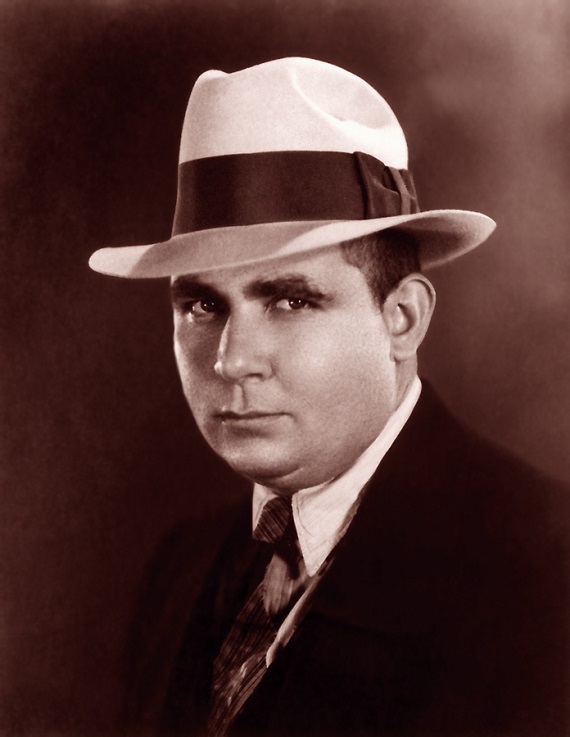
Robert E. Howard: Southern Writer By Mike C. Tuggle
Another gem by Mike C. Tuggle found at the Abbeville Institute. Mike recently released a fine new novel AZTEC MIDNIGHT. Go to the links and experience the author's excellent writing.
Robert E. Howard: Southern Writer
“The novelist with Christian concerns will find in modern life distortions which are repugnant to him, and his problem will be to make these appear as distortions to an audience which is used to seeing them as natural; and he may well be forced to take ever more violent means to get his vision across to this hostile audience. When you can assume that your audience holds the same beliefs you do, you can relax a little and use more normal ways of talking to it; when you have to assume that it does not, then you have to make your vision apparent by shock — to the hard of hearing you shout, and for the almost blind you draw large and startling figures.” Flannery O’Connor
The Southern Gothic tradition, as pioneered by such writers as William Faulkner and Carson McCullers, as well as O’Connor, is noted for its stinging indictment of modern life. Southern Gothic tales feature shocking violence and criminality committed by bizarre, larger-than-life characters clawing for survival in a society that has broken down. Magical and supernatural forces often intervene in unexpected ways.
This Southern literary form is one that Robert E. Howard, had he lived to see it, would have recognized and possibly enriched with his own contributions. Like fiction from the Southern Gothic tradition, Howard’s stories also arose out of the Southern experience, drawing upon the story-telling traditions of the region, and inspired by local tales of Indian wars and blood feuds. Unlike Southern Gothic tales, which take place in the South, Howard’s earthy, vivid, and heroic tales take place in a mythologized Europe. But like O’Connor, Howard penned memorable tales that also critique modern society in the context of standards and values that are distinctly Southern.
Unfortunately, many judge Howard’s Conan stories as escapist fiction. After all, they are populated with witches, sorcerers, vicious monsters, and scheming beauties. They are also highly entertaining, well-crafted, and bristling with energy. But there’s a dark, brooding worldview that emerges from these vivid tales of swordplay and magic.
Howard, a native Texan, is famous for his series of short stories and novels featuring Conan the Barbarian, a powerful and skilled brawler, pirate, mercenary, and finally, ruler of mythical Aquilonia. One of the real-life colorful characters who inspired the young writer was his maternal grandfather, six-foot-one, gray-eyed George Ervin. “Colonel” Ervin was a Confederate veteran born in North Carolina who was living in Mississippi when war broke out. Ervin possessed what Mary Boykin Chesnut famously described as “the red-hot Southern martial spirit.” As Howard scholar Damon C. Sasser observes:
Howard had a profound admiration for his grandfather’s exploits, a Confederate veteran, a man who “rode for four years with Bedford Forrest,” “was accounted the strongest man in his regiment and one of the strongest men in Forrest’s command. He could cleave a man from shoulder to waist with a single stroke of his saber,” [he] “loaned money, dealt some in cattle; he bought a sheep ranch, but, in the midst of a cattle country, with hired men running it, it was not a success. He wandered over into western New Mexico and worked a silver mine not far from the Arizona line” where “old chief Geronimo once stole a bunch of [his] horses.”Howard’s grandfather not only lived an adventurous life, but tasted both success and tragic failure. In one of Howard’s finest Conan stories, Beyond the Black River, one can hear “Colonel” Ervin’s life story echoed in Conan’s comment, “I’ve been a mercenary captain, a corsair, a kozak, a penniless vagabond, a general — hell, I’ve been everything except a king, and I may be that, before I die.”
In addition to his larger-than-life grandfather, Howard also drew inspiration from his Anglo-Celtic heritage. Tales of Celtic warfare fired his imagination, and certainly planted the seeds of the future exploits of Conan and other characters. In a letter to fellow author H.P. Lovecraft, Howard wrote:
Books dealing on Scottish history were easier for me to obtain than those dealing with Irish history, so in my childhood I knew infinitely more about Scottish history and legendry than Irish. I had a distinct Scottish patriotism, and liked nothing better than reading about the Scotch and English wars. I enacted these wars in my games and galloped full tilt through the mesquite on a bare-backed racing mare, hewing right and left with a Mexican machete and slicing off cactus pears which I pretended were the heads of English knights.Howard’s Conan stories portray a hero who is an honest, fierce, manly, and incorruptible barbarian who cannot comprehend the soft, cynical, self-doubting, and decadent city dwellers he often has to rescue. Conan’s attitude toward “civilization” and “progress” reflected Howard’s own views, formed by Howard’s childhood in a series of oil boomtowns his family moved to within the first eleven years of his life. The frenetic and seedy climate of city life, bred from quick wealth and unbridled industrialism, led Howard to see all cities as hotbeds of enervating luxury, corruption, and degeneracy.
The heroes of the past, including his cowboy and ex-soldier grandfather, stood out in Howard’s mind as brave but lonely figures standing in defiance against the living death of a civilization in decline. In a 1931 letter to Lovecraft, Howard confessed that his imagination was an escape from the money-obsessed society he felt trapped in:
I have lived in the Southwest all my life, yet most of my dreams are laid in cold, giant lands of icy wastes and gloomy skies, and of wild, windswept fens and wilderness over which sweep great sea-winds, and which are inhabited by shock-headed savages with light fierce eyes. Always I am the barbarian, the skin-clad, tousle-haired, light-eyed wild man, armed with a rude axe or sword, fighting the elements and wild beasts, or grappling with armored hosts marching with the tread of civilized discipline, from fallow fruitful lands and walled cities. This is reflected in my writings, too, for when I begin a tale of old times, I always find myself instinctively arrayed on the side of the barbarian, against the powers of organized civilization.Howard regarded the “powers of organized civilization” as flattening, ruthless, and tyrannical. In the foreword to Bran Mak Morn, Howard revealed himself as “an instinctive enemy of Rome,” and that his hero Bran Mak Morn, a fearless Pict chieftain, was “merely the symbol of my own antagonism toward the empire.” In Hour of the Dragon, Conan, having lost the throne of Aquilonia in a coup led by an evil sorcerer, rejects a supporter’s offer to return him to power by helping him conquer other lands:
“Let others dream imperial dreams. I but wish to hold what is mine. I have no desire to rule an empire welded together by blood and fire. It’s one thing to seize a throne with the aid of its subjects and rule them with their consent. It’s another to subjugate a foreign realm and rule it by fear.”It’s easy to imagine Grandpa Ervin, who was once held as a prisoner of war by the invading Yankee army, agreeing with such sentiments.
Robert E. Howard harbored the Southerner’s respect for nature and the undying influence exerted by the land of one’s birth. In another lengthy and articulate letter to H.P. Lovecraft, Howard wrote:
Man is greatly molded by his surroundings. I believe, for instance, that the gloominess in my own nature can be partly traced to the surroundings of a locality in which I spent part of my baby-hood. It was a long, narrow valley, lonesome and isolated, up in the Palo Pinto hill country. It was very sparsely settled and its name, Dark Valley, was highly descriptive. So high were the ridges, so thick and tall the oak trees that it was shadowy even in the daytime, and at night it was as dark as a pine forest – and nothing is darker in this world. The creatures of the night whispered and called to one another, faint night-winds murmured through the leaves and now and then among the slightly waving branches could be glimpsed the gleam of a distant star. Surely, the silence, the brooding loneliness, the shadowy mysticism of that lonesome valley entered in some part into my vague-forming nature. At the mouth of the valley stood a deserted and decaying cabin in which a cold-blooded and midnight murder had taken place; owls called weirdly about its ruins in the moonlight, and bats flitted about it in the twilight.Like his creator, Conan had only contempt for those who resorted to shady dealings and political intrigue to acquire what they wanted in life. Conan lived by a strict code of honor, even when stealing from the rich and powerful. Conan might commandeer a poor fisherman’s boat in an emergency, as he did in Hour of the Dragon, but made sure the man received “a helmet full of gold” in return. That code also required him to assist those in peril, even when doing so placed him in danger, which it did on numerous occasions. Most important, Conan remained loyal to those he considered his friends. Those who did not share his code he brusquely ignored; those who ran afoul of that code were dealt with accordingly. In Queen of the Black Coast, Conan tries patiently to explain to a judge why he could not testify against a comrade in arms. But a barbarian’s patience only goes so far:
“Well, last night in a tavern, a captain in the king’s guard offered violence to the sweetheart of a young soldier, who naturally ran him through. But it seems there is some cursed law against killing guardsmen, and the boy and his girl fled away. It was bruited about that I was seen with them, and so today I was haled into court, and a judge asked me where the lad had gone. I replied that since he was a friend of mine, I could not betray him. Then the court waxed wrath, and the judge talked a great deal about my duty to the state, and society, and other things I did not understand, and bade me tell where my friend had flown. By this time I was becoming wrathful myself, for I had explained my position.A natural aristocrat living, fighting, and enjoying life as best he could in a doomed world, Conan often reacted vigorously to attacks, whether on his person or his honor. In The Tower of the Elephant, Conan observed, “Civilized men are more discourteous than savages because they know they can be impolite without having their skulls split.” If they could have gotten their hands on the stories of Robert E. Howard’s rugged and proud hero, John Randolph and Preston Brooks would have approved.
“But I choked my ire and held my peace, and the judge squalled that I had shown contempt for the court, and that I should be hurled into a dungeon to rot until I betrayed my friend. So then, seeing they were all mad, I drew my sword and cleft the judge’s skull; then I cut my way out of the court, and seeing the high constable’s stallion tied near by, I rode for the wharfs, where I thought to find a ship bound for foreign parts.”
Tuesday, December 30, 2014
New Book Release - AZTEC MIDNIGHT by M.C. Tuggle
From the dedicated and unwavering Old Rebel comes the release of his new novella. Long considered a daily must read around these parts, I highly recommend a yarn from a authentic southern thinker and writer. Here is a sample of what to expect from this new work Aztec Midnight:
Aztec Midnight is published by The Novel Fox, and is available
at Amazon, Apple iTunes, Barnes & Noble, Kobo, and Google
Books.
Charlotte, NC--December 26, 2014. “They’re
coming,” says A.J. Louderback, sheriff of Jackson
County, Texas. And he’s not the only public official warning of the growing
threat of Mexican drug cartels. Senator Jeff Sessions of Alabama and Representative Marsha Blackburn of Tennessee have publicly expressed their concerns about
these cartels expanding their reach into the U.S.
Set against this modern-day background of the growing power
and brazenness of these cartels, the just-released novella Aztec Midnight explores the explosive
combination of Mexican economic woes and American complicity in a gripping tale
Kirkus Reviews says “zips right along from twist to twist,
eventually arriving at a bloody finale.”
Foreward
Reviews
writes that Aztec
Midnight
is “a suspenseful,
driving thriller” that
“amps up the
suspense with well-crafted dialogue and a Mexican drug cartel
subplot.”
North
Carolina
writer M.C. Tuggle based his story on his travels to Mexico, his
encounter with the Mexican military, and interviews with the inhabitants of the
Mexican village where he researched his story. Aztec Midnight
is the fast-paced tale of Jonathan Barrrett, an American expert in pre-Columbian
weapons, who journeys to
Cuernavaca with
his wife Susanna at the request of Eric Winwood, a high-ranking State Department
official. Barrett’s mission is to find and rescue the sacred knife of Aztec
emperor Ahuitzotl before the cartels can claim it. Locating the knife proves
more challenging and dangerous than Dr. Barrett anticipated, and he and Susanna
soon find themselves at the center of the cartels’ search. For Dr. Barrett and
his wife to survive, he will be forced to apply his knowledge of ancient weapons
in the face of an ancient power he never imagined.
Tito
Perdue,
the acclaimed author of Lee
and Fields of
Asphodel, calls
Tuggle an “author
who knows something about drug cartels, about the lure of artifacts (magic ones
especially), and about the derring-do of academical people when pushed to the
wall. Who knows how to write clearly and design a suspenseful plot.”
ISBN
978-1-68042-002-9
The Novel
Fox
P.O.
Box 310458, Miami, Florida 33231
http://www.thenovelfox.com/
About The Author:
About The Author:
M.C. Tuggle’s fantasy, science
fiction, and literary stories have been featured in Kzine, Bewildering
Stories, Mystic Signals, Fabula Argentea, and Fiction 365. In addition
to fantasy, science fiction, and crime novels, he enjoys reading
history, with an emphasis on military history, and has given
presentations on Stonewall Jackson's Valley Campaign to several
historical societies. An avid weightlifter, tennis player, collector of
American Indian relics, and student of martial arts.
Please check out his new work and help support a True Brother Of Liberty.
Monday, December 15, 2014

Wednesday, November 12, 2014
What Really Happened to Emmett Till
I have always wondered what the full details of this incident were.
Killer's Confession from Look Magazine
The Shocking Story of Approved Killing in Mississippi
By William Bradford Huie
Editors Note: In the long history of man's inhumanity to man, racial conflict has produced some of the most horrible examples of brutality. The recent slaying of Emmett Till in Mississippi is a case in point. The editors of Look are convinced that they are presenting here, for the first time, the real story of that killing -- the story no jury heard and no newspaper reader saw.
Disclosed here is the true account of the slaying in Mississippi of a Negro youth named Emmett Till.
Last September in Sumner, Miss., a petit jury found the youth's admitted abductors not guilty of murder. In November, in Greenwood, a grand jury declined to indict them for kidnapping.
Of the murder trial, the Memphis Commercial Appeal said: "Evidence necessary for convicting on a murder charge was lacking." But with truth absent, hypocrisy and myth have flourished. Now, hypocrisy can be exposed; myth dispelled. Here are the facts.
Carolyn Holloway Bryant is 21, five feet tall, weighs 103 pounds. An Irish girl, with black hair and black eyes, she is a small farmer's daughter who, at 17, quit high school at Indianola, Miss., to marry a soldier, Roy Bryant, then 20, now 24. The couple have two boys, three and two; and they operate a store at a dusty crossroads called Money: post office, filling station and three stores clustered around a school and a gin, and set in the vast, lonely cotton patch that is the Mississippi Delta.
Carolyn and Roy Bryant are poor: no car, no TV. They live in the back of the store which Roy's brothers helped set up when he got out of the 82nd Airborne in 1953. They sell "snuff-and-fatback" to Negro field hands on credit: and they earn little because, for one reason, the government has been giving the Negroes food they formerly bought.
Carolyn and Roy Bryant's social life is visits to their families, to the Baptist church, and, whenever they can borrow a car, to a drive-in, with the kids sleeping in the back seat. They call Shane the best picture they ever saw.
For extra money, Carolyn tends store when Roy works outside -- like truck driving for a brother. And he has many brothers. His mother had two husbands, 11 children. The first five -- all boys -- were "Milam children"; the next six -- three boys, three girls -- were "Bryant children."
This is a lusty and devoted clan. They work, fight, vote and play as a family. The "half" in their fraternity is forgotten. For years, they have operated a chain of cottonfield stores, as well as trucks and mechanical cotton pickers. In relation to the Negroes, they are somewhat like white traders in portions of Africa today; and they are determined to resist the revolt of colored men against white rule.
On Wednesday evening, August 24, 1955, Roy was in Texas, on a brother's truck. He had carted shrimp from New Orleans to San Antonio, proceeded to Brownsville. Carolyn was alone in the store. But back in the living quarters was her sister-in-law Juanita Milam, 27, with her two small sons and Carolyn's two. The store was kept open till 9 on week nights, 11 on Saturday.
When her husband was away, Carolyn Bryant never slept in the store, never stayed there alone after dark. Moreover, in the Delta, no white woman ever travels country roads after dark unattended by a man.
This meant that during Roy's absences -- particularly since he had no car -- there was family inconvenience. Each afternoon, a sister-in-law arrived to stay with Carolyn until closing time. Then, the two women, with their children, waited for a brother-in-law to convoy them to his home. Next morning, the sister-in-law drove Carolyn back.
Juanita Milam had driven from her home in Glendora. She had parked in front of the store to the left; and under the front seat of this car was Roy Bryant's pistol, a .38 Colt automatic. Carolyn knew it was there. After 9, Juanita's husband, J. W. Milam, would arrive in his pickup to shepherd them to his home for the night.
About 7:30 pm, eight young Negroes -- seven boys and a girl -- in a '46 Ford had stopped outside. They included sons, grandsons and a nephew of Moses (Preacher) Wright, 64, a 'cropper. They were between 13 and 19 years old. Four were natives of the Delta and others, including the nephew, Emmett (Bobo) Till, were visiting from the Chicago area.
Bobo Till was 14 years old: born on July 25, 1941. He was stocky, muscular, weighing about 160, five feet four or five. Preacher later testified: "He looked like a man."
Bobo's party joined a dozen other young Negroes, including two other girls, in front of the store. Bryant had built checkerboards there. Some were playing checkers, others were wrestling and "kiddin' about girls."
Bobo bragged about his white girl. He showed the boys a picture of a white girl in his wallet; and to their jeers of disbelief, he boasted of success with her.
"You talkin' mighty big, Bo," one youth said. "There's a pretty little white woman in the store. Since you know how to handle white girls, let's see you go in and get a date with her?"
"You ain't chicken, are yuh, Bo?" another youth taunted him.
Bobo had to fire or fall back. He entered the store, alone, stopped at the candy case. Carolyn was behind the counter; Bobo in front. He asked for two cents' worth of bubble gum. She handed it to him. He squeezed her hand and said: "How about a date, baby?"
She jerked away and started for Juanita Milam. At the break between counters, Bobo jumped in front of her, perhaps caught her at the waist, and said: "You needn't be afraid o' me, Baby. I been with white girls before."
[ED NOTE: The phrase "I been with white girls before" might have been possibly "I f**ked white girls before." or something similar. Court records show Carolyn Bryant testified that Till used an "unprintable word":
Carolyn Bryant described the August 24 incident at Bryant's Grocery & Meat Market. Bryant said that "just after dark" with her alone in the store, Till strongly gripped her hand as she held in out on the candy counter to collect money. She said she jerked her hand loose "with much difficulty" as Till asked her, "How about a date, baby?" When she tried to walk away, she stated, Till grabbed her by the waist and said, "You needn't be afraid of me. I've"--and here Bryant said Till used an "unprintable word"--"white women before." Bryant testified, "I was just scared to death."
I looked at Wikipedia to see what it had in reference to this. Wikipedia's account suggests something different, as if some random curse word was just thrown out. ]
[Also, from a comment found, edited for vulgarity:
"Now, I'm going to stop right there. Close your eyes. Imagine it is 2013. You have a 100-pound wife. A 14-year-old, 150-lb white kid grabs her and says, "Don't be afraid; I've f**ked married women before." What are you going to do to that kid? Now imagine it's 1955, and a white kid did that to your wife. The truth has very little to do with the fact that Till was black. It has everything to do with the fact that Till acted like (trashy, verbal/sexual assaulter).....
When Till's friends saw what he was doing, they grabbed him and quickly hustled him out of the store. Carolyn Bryant stopped, ran out the front door behind them to her brother-in-law's car, and grabbed a pistol from under the seat. She was terrified. I don't have to explain to any of you why. "]
At this point, a cousin ran in, grabbed Bobo and began pulling him out of the store. Carolyn now ran, not for Juanita, but out the front, and got the pistol from the Milam car.
Outside, with Bobo being ushered off by his cousins, and with Carolyn getting the gun, Bobo executed the "wolf whistle" which gave the case its name:
THE WOLF-WHISTLE MURDER: A NEGRO "CHILD" OR "BOY" WHISTLED AT HER AND THEY KILLED HIM.
That was the sum of the facts on which most newspaper readers based an opinion.
The Negroes drove away; and Carolyn, shaken, told Juanita. The two women determined to keep the incident from their "Men-folks." They didn't tell J. W. Milam when he came to escort them home.
By Thursday afternoon, Carolyn Bryant could see the story was getting around. She spent Thursday night at the Milams, where at 4 a.m. (Friday) Roy got back from Texas. Since he had slept little for five nights, he went to bed at the Milams' while Carolyn returned to the store.
During Friday afternoon, Roy reached the store, and shortly thereafter a Negro told him what "the talk" was, and told him that the "Chicago boy" was "visitin' Preacher." Carolyn then told Roy what had happened.
Once Roy Bryant knew, in his environment, in the opinion of most white people around him, for him to have done nothing would have marked him for a coward and a fool.
On Friday night, he couldn't do anything. He and Carolyn were alone, and he had no car. Saturday was collection day, their busy day in the store. About 10:30 Saturday night, J. W. Milam drove by. Roy took him aside.
"I want you to come over early in the morning," he said. "I need a little transportation."
J.W. protested: "Sunday's the only morning I can sleep. Can't we make it around noon?"
Roy then told him.
"I'll be there," he said. "Early."
J. W. drove to another brother's store at Minter City, where he was working. He closed that store about 12:30 a.m., drove home to Glendora. Juanita was away, visiting her folks at Greenville. J. W. had been thinking. He decided not to go to bed. He pumped the pickup -- a half-ton '55 Chevrolet -- full of gas and headed for Money.
J. W. "Big Milam" is 36: six feet two, 235 pounds; an extrovert. Short boots accentuate his height; khaki trousers; red sports shirt; sun helmet. Dark-visaged; his lower lip curls when he chuckles; and though bald, his remaining hair is jet-black.
He is slavery's plantation overseer. Today, he rents Negro-driven mechanical cotton pickers to plantation owners. Those who know him say that he can handle Negroes better than anybody in the country.
Big Milam soldiered in the Patton manner. With a ninth-grade education, he was commissioned in battle by the 75th Division. He was an expert platoon leader, expert street fighter, expert in night patrol, expert with the "grease gun," with every device for close range killing. A German bullet tore clear through his chest; his body bears "multiple shrapnel wounds." Of his medals, he cherishes one: combat infantryman's badge.
Big Milam, like many soldiers, brought home his favorite gun: the .45 Colt automatic pistol.
"Best weapon the Army's got," he says. "Either for shootin' or sluggin'."
Two hours after Big Milam got the word -- the instant minute he could close the store -- he was looking for the Chicago Negro.
Big Milam reached Money a few minutes shy of 2 a.m., Sunday, August 28. The Bryants were asleep; the store was dark but for the all-night light. He rapped at the back door, and when Roy came, he said: "Let's go. Let's make that trip now."
Roy dressed, brought a gun: this one was a .45 Colt. Both men were and remained -- cold sober. Big Milam had drunk a beer at Minter City around 9; Roy had had nothing.
There was no moon as they drove to Preacher's house: 2.8 miles east of Money.
Preacher's house stands 50 feet right of the gravel road, with cedar and persimmon trees in the yard. Big Milam drove the pickup in under the trees. He was bareheaded, carrying a five-cell flashlight in his left hand, the .45 in the right.
Roy Bryant pounded on the door.
Preacher: "Who's that?"
Bryant: "Mr. Bryant from Money, Preacher."
Preacher: "All right, sir. Just a minute."
Preacher came out of the screened-in porch.
Bryant: "Preacher, you got a boy from Chicago here?"
Preacher: "Yessir."
Bryant: "I want to talk to him."
Preacher: "Yessir. I'll get him."
Preacher led them to a back bedroom where four youths were sleeping in two beds. In one was Bobo Till and Simeon Wright, Preacher's youngest son. Bryant had told Preacher to turn on the lights; Preacher had said they were out of order. So only the flashlight was used.
The visit was not a complete surprise. Preacher testified that he had heard of the "trouble," that he "sho' had" talked to his nephew about it. Bobo himself had been afraid; he had wanted to go home the day after the incident. The Negro girl in the party urged that he leave. "They'll kill him," she had warned. But Preacher's wife, Elizabeth Wright, had decided that the danger was being magnified; she had urged Bobo to "finish yo' visit."
"I thought they might say something to him, but I didn't think they'd kill a boy," Preacher said.
Big Milam shined the light in Bobo's face, said: "You the nigger who did the talking?"
"Yeah," Bobo replied.
Milam: "Don't say, 'Yeah' to me: I'll blow your head off. Get your clothes on."
Bobo had been sleeping in his shorts. He pulled on a shirt and trousers, then reached for his socks.
"Just the shoes," Milam hurried him.
"I don't wear shoes without socks," Bobo said: and he kept the gun-bearers waiting while he put on his socks, then a pair of canvas shoes with thick crepe soles.
Preacher and his wife tried two arguments in the boy's behalf.
"He ain't got good sense," Preacher begged. "He didn't know what he was doing. Don't take him."
"I'll pay you gentlemen for the damages," Elizabeth Wright said.
"You niggers go back to sleep," Milam replied.
They marched him into the yard, told him to get in the back of the pickup and lie down. He obeyed. They drove toward Money.
Elizabeth Wright rushed to the home of a white neighbor, who got up, looked around, but decided he could do nothing. Then, she and Preacher drove to the home of her brother, Crosby Smith, at Sumner; and Crosby Smith, on Sunday morning, went to the sheriff's office at Greenwood.
The other young Negroes stayed at Preacher's house until daylight, when Wheeler Parker telephoned his mother in Chicago, who in turn notified Bobo's mother, Mamie Bradley, 33, 6427 S. St. Lawrence.
Had there been any doubt as to the identity of the "Chicago boy who done the talking," Milam and Bryant would have stopped at the store for Carolyn to identify him. But there had been no denial. So they didn't stop at the store. At Money, they crossed the Tallahatchie River and drove west.
Their intention was to "just whip him... and scare some sense into him." And for this chore, Big Milam knew "the scariest place in the Delta." He had come upon it last year hunting wild geese. Over close to Rosedale, the Big River bends around under a bluff. "Brother, she's a 100-foot sheer drop, and she's a 100 feet deep after you hit."
Big Milam's idea was to stand him up there on that bluff, "whip" him with the .45, and then shine the light on down there toward that water and make him think you're gonna knock him in.
"Brother, if that won't scare the Chicago -------, hell won't."
Searching for this bluff, they drove close to 75 miles. Through Shellmound, Schlater, Doddsville, Ruleville, Cleveland to the intersection south of Rosedale. There they turned south on Mississippi No. 1, toward the entrance to Beulah Lake. They tried several dirt and gravel roads, drove along the levee. Finally, they gave up: in the darkness, Big Milam couldn't find his bluff.
They drove back to Milam's house at Glendora, and by now it was 5 a.m.. They had been driving nearly three hours, with Milam and Bryant in the cab and Bobo lying in the back.
At some point when the truck slowed down, why hadn't Bobo jumped and run? He wasn't tied; nobody was holding him. A partial answer is that those Chevrolet pickups have a wraparound rear window the size of a windshield. Bryant could watch him. But the real answer is the remarkable part of the story.
Bobo wasn't afraid of them! He was tough as they were. He didn't think they had the guts to kill him.
Milam: "We were never able to scare him. They had just filled him so full of that poison that he was hopeless."
Back of Milam's home is a tool house, with two rooms each about 12 feet square. They took him in there and began "whipping" him, first Milam then Bryant smashing him across the head with those .45's. Pistol-whipping: a court-martial offense in the Army... but MP's have been known to do it.... And Milam got information out of German prisoners this way.
But under these blows Bobo never hollered -- and he kept making the perfect speeches to insure martyrdom.
Bobo: "You bastards, I'm not afraid of you. I'm as good as you are. I've 'had' white women. My grandmother was a white woman."
Milam: "Well, what else could we do? He was hopeless. I'm no bully; I never hurt a nigger in my life. I like niggers -- in their place -- I know how to work 'em. But I just decided it was time a few people got put on notice. As long as I live and can do anything about it, niggers are gonna stay in their place. Niggers ain't gonna vote where I live. If they did, they'd control the government. They ain't gonna go to school with my kids. And when a nigger gets close to mentioning sex with a white woman, he's tired o' livin'. I'm likely to kill him. Me and my folks fought for this country, and we got some rights. I stood there in that shed and listened to that nigger throw that poison at me, and I just made up my mind. 'Chicago boy,' I said, 'I'm tired of 'em sending your kind down here to stir up trouble. Goddam you, I'm going to make an example of you -- just so everybody can know how me and my folks stand.'"
So Big Milam decided to act. He needed a weight. He tried to think of where he could get an anvil. Then he remembered a gin which had installed new equipment. He had seen two men lifting a discarded fan, a metal fan three feet high and circular, used in ginning cotton.
Bobo wasn't bleeding much. Pistol-whipping bruises more than it cuts. They ordered him back in the truck and headed west again. They passed through Doddsville, went into the Progressive Ginning Company. This gin is 3.4 miles east of Boyle: Boyle is two miles south of Cleveland. The road to this gin turns left off U.S. 61, after you cross the bayou bridge south of Boyle.
Milam: "When we got to that gin, it was daylight, and I was worried for the first time. Somebody might see us and accuse us of stealing the fan."
Bryant and Big Milam stood aside while Bobo loaded the fan. Weight: 74 pounds. The youth still thought they were bluffing.
They drove back to Glendora, then north toward Swan Lake and crossed the "new bridge" over the Tallahatchie. At the east end of this bridge, they turned right, along a dirt road which parallels the river. After about two miles, they crossed the property of L.W. Boyce, passing near his house.
About 1.5 miles southeast of the Boyce home is a lonely spot where Big Milam has hunted squirrels. The river bank is steep. The truck stopped 30 yards from the water.
Big Milam ordered Bobo to pick up the fan.
He staggered under its weight... carried it to the river bank. They stood silently... just hating one another.
Milam: "Take off your clothes."
Slowly, Bobo pulled off his shoes, his socks. He stood up, unbuttoned his shirt, dropped his pants, his shorts.
He stood there naked.
It was Sunday morning, a little before 7.
Milam: "You still as good as I am?"
Bobo: "Yeah."
Milam: "You still 'had' white women?"
Bobo: "Yeah."
That big .45 jumped in Big Milam's hand. The youth turned to catch that big, expanding bullet at his right ear. He dropped.
They barb-wired the gin fan to his neck, rolled him into 20 feet of water.
For three hours that morning, there was a fire in Big Milam's back yard: Bobo's crepe soled shoes were hard to burn.
Seventy-two hours later -- eight miles downstream -- boys were fishing. They saw feet sticking out of the water. Bobo.
The majority -- by no means all, but the majority -- of the white people in Mississippi 1) either approve Big Milam's action or else 2) they don't disapprove enough to risk giving their "enemies" the satisfaction of a conviction.
Killer's Confession from Look Magazine
The Shocking Story of Approved Killing in Mississippi
By William Bradford Huie
Editors Note: In the long history of man's inhumanity to man, racial conflict has produced some of the most horrible examples of brutality. The recent slaying of Emmett Till in Mississippi is a case in point. The editors of Look are convinced that they are presenting here, for the first time, the real story of that killing -- the story no jury heard and no newspaper reader saw.
Disclosed here is the true account of the slaying in Mississippi of a Negro youth named Emmett Till.
Last September in Sumner, Miss., a petit jury found the youth's admitted abductors not guilty of murder. In November, in Greenwood, a grand jury declined to indict them for kidnapping.
Of the murder trial, the Memphis Commercial Appeal said: "Evidence necessary for convicting on a murder charge was lacking." But with truth absent, hypocrisy and myth have flourished. Now, hypocrisy can be exposed; myth dispelled. Here are the facts.
Carolyn Holloway Bryant is 21, five feet tall, weighs 103 pounds. An Irish girl, with black hair and black eyes, she is a small farmer's daughter who, at 17, quit high school at Indianola, Miss., to marry a soldier, Roy Bryant, then 20, now 24. The couple have two boys, three and two; and they operate a store at a dusty crossroads called Money: post office, filling station and three stores clustered around a school and a gin, and set in the vast, lonely cotton patch that is the Mississippi Delta.
Carolyn and Roy Bryant are poor: no car, no TV. They live in the back of the store which Roy's brothers helped set up when he got out of the 82nd Airborne in 1953. They sell "snuff-and-fatback" to Negro field hands on credit: and they earn little because, for one reason, the government has been giving the Negroes food they formerly bought.
Carolyn and Roy Bryant's social life is visits to their families, to the Baptist church, and, whenever they can borrow a car, to a drive-in, with the kids sleeping in the back seat. They call Shane the best picture they ever saw.
For extra money, Carolyn tends store when Roy works outside -- like truck driving for a brother. And he has many brothers. His mother had two husbands, 11 children. The first five -- all boys -- were "Milam children"; the next six -- three boys, three girls -- were "Bryant children."
This is a lusty and devoted clan. They work, fight, vote and play as a family. The "half" in their fraternity is forgotten. For years, they have operated a chain of cottonfield stores, as well as trucks and mechanical cotton pickers. In relation to the Negroes, they are somewhat like white traders in portions of Africa today; and they are determined to resist the revolt of colored men against white rule.
On Wednesday evening, August 24, 1955, Roy was in Texas, on a brother's truck. He had carted shrimp from New Orleans to San Antonio, proceeded to Brownsville. Carolyn was alone in the store. But back in the living quarters was her sister-in-law Juanita Milam, 27, with her two small sons and Carolyn's two. The store was kept open till 9 on week nights, 11 on Saturday.
When her husband was away, Carolyn Bryant never slept in the store, never stayed there alone after dark. Moreover, in the Delta, no white woman ever travels country roads after dark unattended by a man.
This meant that during Roy's absences -- particularly since he had no car -- there was family inconvenience. Each afternoon, a sister-in-law arrived to stay with Carolyn until closing time. Then, the two women, with their children, waited for a brother-in-law to convoy them to his home. Next morning, the sister-in-law drove Carolyn back.
Juanita Milam had driven from her home in Glendora. She had parked in front of the store to the left; and under the front seat of this car was Roy Bryant's pistol, a .38 Colt automatic. Carolyn knew it was there. After 9, Juanita's husband, J. W. Milam, would arrive in his pickup to shepherd them to his home for the night.
About 7:30 pm, eight young Negroes -- seven boys and a girl -- in a '46 Ford had stopped outside. They included sons, grandsons and a nephew of Moses (Preacher) Wright, 64, a 'cropper. They were between 13 and 19 years old. Four were natives of the Delta and others, including the nephew, Emmett (Bobo) Till, were visiting from the Chicago area.
Bobo Till was 14 years old: born on July 25, 1941. He was stocky, muscular, weighing about 160, five feet four or five. Preacher later testified: "He looked like a man."
Bobo's party joined a dozen other young Negroes, including two other girls, in front of the store. Bryant had built checkerboards there. Some were playing checkers, others were wrestling and "kiddin' about girls."
Bobo bragged about his white girl. He showed the boys a picture of a white girl in his wallet; and to their jeers of disbelief, he boasted of success with her.
"You talkin' mighty big, Bo," one youth said. "There's a pretty little white woman in the store. Since you know how to handle white girls, let's see you go in and get a date with her?"
"You ain't chicken, are yuh, Bo?" another youth taunted him.
Bobo had to fire or fall back. He entered the store, alone, stopped at the candy case. Carolyn was behind the counter; Bobo in front. He asked for two cents' worth of bubble gum. She handed it to him. He squeezed her hand and said: "How about a date, baby?"
She jerked away and started for Juanita Milam. At the break between counters, Bobo jumped in front of her, perhaps caught her at the waist, and said: "You needn't be afraid o' me, Baby. I been with white girls before."
[ED NOTE: The phrase "I been with white girls before" might have been possibly "I f**ked white girls before." or something similar. Court records show Carolyn Bryant testified that Till used an "unprintable word":
Carolyn Bryant described the August 24 incident at Bryant's Grocery & Meat Market. Bryant said that "just after dark" with her alone in the store, Till strongly gripped her hand as she held in out on the candy counter to collect money. She said she jerked her hand loose "with much difficulty" as Till asked her, "How about a date, baby?" When she tried to walk away, she stated, Till grabbed her by the waist and said, "You needn't be afraid of me. I've"--and here Bryant said Till used an "unprintable word"--"white women before." Bryant testified, "I was just scared to death."
I looked at Wikipedia to see what it had in reference to this. Wikipedia's account suggests something different, as if some random curse word was just thrown out. ]
[Also, from a comment found, edited for vulgarity:
"Now, I'm going to stop right there. Close your eyes. Imagine it is 2013. You have a 100-pound wife. A 14-year-old, 150-lb white kid grabs her and says, "Don't be afraid; I've f**ked married women before." What are you going to do to that kid? Now imagine it's 1955, and a white kid did that to your wife. The truth has very little to do with the fact that Till was black. It has everything to do with the fact that Till acted like (trashy, verbal/sexual assaulter).....
When Till's friends saw what he was doing, they grabbed him and quickly hustled him out of the store. Carolyn Bryant stopped, ran out the front door behind them to her brother-in-law's car, and grabbed a pistol from under the seat. She was terrified. I don't have to explain to any of you why. "]
At this point, a cousin ran in, grabbed Bobo and began pulling him out of the store. Carolyn now ran, not for Juanita, but out the front, and got the pistol from the Milam car.
Outside, with Bobo being ushered off by his cousins, and with Carolyn getting the gun, Bobo executed the "wolf whistle" which gave the case its name:
THE WOLF-WHISTLE MURDER: A NEGRO "CHILD" OR "BOY" WHISTLED AT HER AND THEY KILLED HIM.
That was the sum of the facts on which most newspaper readers based an opinion.
The Negroes drove away; and Carolyn, shaken, told Juanita. The two women determined to keep the incident from their "Men-folks." They didn't tell J. W. Milam when he came to escort them home.
By Thursday afternoon, Carolyn Bryant could see the story was getting around. She spent Thursday night at the Milams, where at 4 a.m. (Friday) Roy got back from Texas. Since he had slept little for five nights, he went to bed at the Milams' while Carolyn returned to the store.
During Friday afternoon, Roy reached the store, and shortly thereafter a Negro told him what "the talk" was, and told him that the "Chicago boy" was "visitin' Preacher." Carolyn then told Roy what had happened.
Once Roy Bryant knew, in his environment, in the opinion of most white people around him, for him to have done nothing would have marked him for a coward and a fool.
On Friday night, he couldn't do anything. He and Carolyn were alone, and he had no car. Saturday was collection day, their busy day in the store. About 10:30 Saturday night, J. W. Milam drove by. Roy took him aside.
"I want you to come over early in the morning," he said. "I need a little transportation."
J.W. protested: "Sunday's the only morning I can sleep. Can't we make it around noon?"
Roy then told him.
"I'll be there," he said. "Early."
J. W. drove to another brother's store at Minter City, where he was working. He closed that store about 12:30 a.m., drove home to Glendora. Juanita was away, visiting her folks at Greenville. J. W. had been thinking. He decided not to go to bed. He pumped the pickup -- a half-ton '55 Chevrolet -- full of gas and headed for Money.
J. W. "Big Milam" is 36: six feet two, 235 pounds; an extrovert. Short boots accentuate his height; khaki trousers; red sports shirt; sun helmet. Dark-visaged; his lower lip curls when he chuckles; and though bald, his remaining hair is jet-black.
He is slavery's plantation overseer. Today, he rents Negro-driven mechanical cotton pickers to plantation owners. Those who know him say that he can handle Negroes better than anybody in the country.
Big Milam soldiered in the Patton manner. With a ninth-grade education, he was commissioned in battle by the 75th Division. He was an expert platoon leader, expert street fighter, expert in night patrol, expert with the "grease gun," with every device for close range killing. A German bullet tore clear through his chest; his body bears "multiple shrapnel wounds." Of his medals, he cherishes one: combat infantryman's badge.
Big Milam, like many soldiers, brought home his favorite gun: the .45 Colt automatic pistol.
"Best weapon the Army's got," he says. "Either for shootin' or sluggin'."
Two hours after Big Milam got the word -- the instant minute he could close the store -- he was looking for the Chicago Negro.
Roy dressed, brought a gun: this one was a .45 Colt. Both men were and remained -- cold sober. Big Milam had drunk a beer at Minter City around 9; Roy had had nothing.
There was no moon as they drove to Preacher's house: 2.8 miles east of Money.
Preacher's house stands 50 feet right of the gravel road, with cedar and persimmon trees in the yard. Big Milam drove the pickup in under the trees. He was bareheaded, carrying a five-cell flashlight in his left hand, the .45 in the right.
Roy Bryant pounded on the door.
Preacher: "Who's that?"
Bryant: "Mr. Bryant from Money, Preacher."
Preacher: "All right, sir. Just a minute."
Preacher came out of the screened-in porch.
Bryant: "Preacher, you got a boy from Chicago here?"
Preacher: "Yessir."
Bryant: "I want to talk to him."
Preacher: "Yessir. I'll get him."
Preacher led them to a back bedroom where four youths were sleeping in two beds. In one was Bobo Till and Simeon Wright, Preacher's youngest son. Bryant had told Preacher to turn on the lights; Preacher had said they were out of order. So only the flashlight was used.
The visit was not a complete surprise. Preacher testified that he had heard of the "trouble," that he "sho' had" talked to his nephew about it. Bobo himself had been afraid; he had wanted to go home the day after the incident. The Negro girl in the party urged that he leave. "They'll kill him," she had warned. But Preacher's wife, Elizabeth Wright, had decided that the danger was being magnified; she had urged Bobo to "finish yo' visit."
"I thought they might say something to him, but I didn't think they'd kill a boy," Preacher said.
Big Milam shined the light in Bobo's face, said: "You the nigger who did the talking?"
"Yeah," Bobo replied.
Milam: "Don't say, 'Yeah' to me: I'll blow your head off. Get your clothes on."
Bobo had been sleeping in his shorts. He pulled on a shirt and trousers, then reached for his socks.
"Just the shoes," Milam hurried him.
"I don't wear shoes without socks," Bobo said: and he kept the gun-bearers waiting while he put on his socks, then a pair of canvas shoes with thick crepe soles.
Preacher and his wife tried two arguments in the boy's behalf.
"He ain't got good sense," Preacher begged. "He didn't know what he was doing. Don't take him."
"I'll pay you gentlemen for the damages," Elizabeth Wright said.
"You niggers go back to sleep," Milam replied.
They marched him into the yard, told him to get in the back of the pickup and lie down. He obeyed. They drove toward Money.
Elizabeth Wright rushed to the home of a white neighbor, who got up, looked around, but decided he could do nothing. Then, she and Preacher drove to the home of her brother, Crosby Smith, at Sumner; and Crosby Smith, on Sunday morning, went to the sheriff's office at Greenwood.
The other young Negroes stayed at Preacher's house until daylight, when Wheeler Parker telephoned his mother in Chicago, who in turn notified Bobo's mother, Mamie Bradley, 33, 6427 S. St. Lawrence.
Had there been any doubt as to the identity of the "Chicago boy who done the talking," Milam and Bryant would have stopped at the store for Carolyn to identify him. But there had been no denial. So they didn't stop at the store. At Money, they crossed the Tallahatchie River and drove west.
Their intention was to "just whip him... and scare some sense into him." And for this chore, Big Milam knew "the scariest place in the Delta." He had come upon it last year hunting wild geese. Over close to Rosedale, the Big River bends around under a bluff. "Brother, she's a 100-foot sheer drop, and she's a 100 feet deep after you hit."
Big Milam's idea was to stand him up there on that bluff, "whip" him with the .45, and then shine the light on down there toward that water and make him think you're gonna knock him in.
"Brother, if that won't scare the Chicago -------, hell won't."
Searching for this bluff, they drove close to 75 miles. Through Shellmound, Schlater, Doddsville, Ruleville, Cleveland to the intersection south of Rosedale. There they turned south on Mississippi No. 1, toward the entrance to Beulah Lake. They tried several dirt and gravel roads, drove along the levee. Finally, they gave up: in the darkness, Big Milam couldn't find his bluff.
They drove back to Milam's house at Glendora, and by now it was 5 a.m.. They had been driving nearly three hours, with Milam and Bryant in the cab and Bobo lying in the back.
At some point when the truck slowed down, why hadn't Bobo jumped and run? He wasn't tied; nobody was holding him. A partial answer is that those Chevrolet pickups have a wraparound rear window the size of a windshield. Bryant could watch him. But the real answer is the remarkable part of the story.
Bobo wasn't afraid of them! He was tough as they were. He didn't think they had the guts to kill him.
Milam: "We were never able to scare him. They had just filled him so full of that poison that he was hopeless."
Back of Milam's home is a tool house, with two rooms each about 12 feet square. They took him in there and began "whipping" him, first Milam then Bryant smashing him across the head with those .45's. Pistol-whipping: a court-martial offense in the Army... but MP's have been known to do it.... And Milam got information out of German prisoners this way.
But under these blows Bobo never hollered -- and he kept making the perfect speeches to insure martyrdom.
Bobo: "You bastards, I'm not afraid of you. I'm as good as you are. I've 'had' white women. My grandmother was a white woman."
Milam: "Well, what else could we do? He was hopeless. I'm no bully; I never hurt a nigger in my life. I like niggers -- in their place -- I know how to work 'em. But I just decided it was time a few people got put on notice. As long as I live and can do anything about it, niggers are gonna stay in their place. Niggers ain't gonna vote where I live. If they did, they'd control the government. They ain't gonna go to school with my kids. And when a nigger gets close to mentioning sex with a white woman, he's tired o' livin'. I'm likely to kill him. Me and my folks fought for this country, and we got some rights. I stood there in that shed and listened to that nigger throw that poison at me, and I just made up my mind. 'Chicago boy,' I said, 'I'm tired of 'em sending your kind down here to stir up trouble. Goddam you, I'm going to make an example of you -- just so everybody can know how me and my folks stand.'"
So Big Milam decided to act. He needed a weight. He tried to think of where he could get an anvil. Then he remembered a gin which had installed new equipment. He had seen two men lifting a discarded fan, a metal fan three feet high and circular, used in ginning cotton.
Bobo wasn't bleeding much. Pistol-whipping bruises more than it cuts. They ordered him back in the truck and headed west again. They passed through Doddsville, went into the Progressive Ginning Company. This gin is 3.4 miles east of Boyle: Boyle is two miles south of Cleveland. The road to this gin turns left off U.S. 61, after you cross the bayou bridge south of Boyle.
Milam: "When we got to that gin, it was daylight, and I was worried for the first time. Somebody might see us and accuse us of stealing the fan."
Bryant and Big Milam stood aside while Bobo loaded the fan. Weight: 74 pounds. The youth still thought they were bluffing.
They drove back to Glendora, then north toward Swan Lake and crossed the "new bridge" over the Tallahatchie. At the east end of this bridge, they turned right, along a dirt road which parallels the river. After about two miles, they crossed the property of L.W. Boyce, passing near his house.
About 1.5 miles southeast of the Boyce home is a lonely spot where Big Milam has hunted squirrels. The river bank is steep. The truck stopped 30 yards from the water.
Big Milam ordered Bobo to pick up the fan.
He staggered under its weight... carried it to the river bank. They stood silently... just hating one another.
Milam: "Take off your clothes."
Slowly, Bobo pulled off his shoes, his socks. He stood up, unbuttoned his shirt, dropped his pants, his shorts.
He stood there naked.
It was Sunday morning, a little before 7.
Milam: "You still as good as I am?"
Bobo: "Yeah."
Milam: "You still 'had' white women?"
Bobo: "Yeah."
That big .45 jumped in Big Milam's hand. The youth turned to catch that big, expanding bullet at his right ear. He dropped.
They barb-wired the gin fan to his neck, rolled him into 20 feet of water.
For three hours that morning, there was a fire in Big Milam's back yard: Bobo's crepe soled shoes were hard to burn.
Seventy-two hours later -- eight miles downstream -- boys were fishing. They saw feet sticking out of the water. Bobo.
The majority -- by no means all, but the majority -- of the white people in Mississippi 1) either approve Big Milam's action or else 2) they don't disapprove enough to risk giving their "enemies" the satisfaction of a conviction.
Wednesday, October 29, 2014
Geroge Mason, Patrick Henry, and Nationalism contra Federalism
Was Nationalism Sold To the Country As Federalism?by Al Benson Jr.
It seems that, under the Articles of Confederation, there were states rights, as each state was considered sovereign and independent. However, with the ratification of the new constitution, that seems to have disappeared. Historian Clarence Carson has noted that, regarding the Articles of Confederation: “This bent, or tradition can be traced to many sources. Americans were, above all, a people of the book–the written word–the Bible. There was the Puritan idea, too, of the Covenant, an agreement between man and man and between man and God…Colonists had drawn their own political agreements, such as the Mayflower Compact and the Fundamental Orders of Connecticut…Once the colonies had broken away from England, the only historical allegiances that remained were to the states and localities…At any rate, there should be no doubt that the government of the United States under the Articles of Confederation was brought into being by the states.”
Some delegates saw the new Constitution as potentially tyrannical and refused to sign it. It seems that statesmen in those days had a far clearer view of things than do our present politicians, who I will not dignify by calling them statesmen.
George Mason of Virginia was unwilling to sign. The major objection was that the new document did not contain a bill of rights and there were objections in several state conventions to ratification being enacted too hastily without such being made part of the document. Patrick Henry argued, and rightfully so, in the light of history, that a specific bill of rights was essential. He observed that governments regularly and automatically assumed powers that were not prohibited to them. Can anyone in our day deny this truth? We have a Commander-in-Chief that regularly rules the country by executive fiat when he can’t get a usually-willing Congress to go along with something he has been instructed to ram through. And Congress never seems to complain. They sit back and let him do it. In our day the Executive Branch of government regularly usurps powers denied to it and the courts ignore the whole situation, giving the Executive and Legislative branches a wink and a nod as our rights are stolen. So much for checks and balances–another bill of goods we have been sold.
Added to all this was the continuing problem of differing views of the Constitution, which seems to have been a major problem back before the War of Northern Aggression.
In his book The Confederate Constitution of 1861 Marshall DeRosa noted that: “Within the context of American federalism does sovereignty reside in the people in their national or state capacities? To be more precise, does the U.S. Constitution establish an association of sovereign individuals within their respective states or a national community of sovereign individuals the states notwithstanding?” It seems that within the ‘more perfect Union” there has always been this tension. DeRosa noted that by 1861 this tension had become a major cleavage so that the Constitution “rather served as a vehicle for dissension and separation.”
DeRosa observed that: “This was most certainly the case by 1861, as Northerners insisted on a model of federalism consisting of a national community of individuals, with sovereignty being a national phenomenon–that is, nationalism–whereas Southerners adhered to a model consisting of a community of states.”
John C. Calhoun, while he was still alive, (he died in March, 1850) noticed that a transition was taking place wherein the old Federal Republic was being transformed into a consolidated democracy, which placed sovereign authority at the national level while taking power away from the states. That trend continued, with William Henry Seward claiming that the Constitution had established a national community of individuals and not a community of states. Seward was from New York.
And this thought has occurred to me–is it just possible that what Calhoun observed as a transformation was, in fact, actually there in seed form at the very beginning?
According to DeRosa, Seward claimed that: “the States are not parties to the Constitution as States; it is the Constitution of the people of the United States. But even if the States continue as States, they have surrendered their equality as States, and submitted themselves to the sway of the numerical majority…” There is no way I can agree with Seward’s blatant nationalism, but, what if that was really the intent from the beginning? What if nationalism was sold to the Southern states surreptitiously as federalism and, outside of a few men like Patrick Henry, hardly any grasped that? While that may sound far out to some, is it any further out than the idea of a group of men eagerly signing up for a “Union” they could not secede from only 13 years after they had experienced the same situation with Great Britain?
You have to wonder what would make men yoke themselves and their states again to a bondage they had only recently fought a war of independence to get away from. You have to wonder if some of these delegates had in mind something other than the freedom and liberty for both states and individuals that Patrick Henry envisioned.
An educated pastor once said to me “You have to wonder if there were some anti-Christs in that (constitutional) convention.” At the time, I did not grasp the enormity of his assertion. Now I have begun to.
Where Mason Left Us by Vito Mussomeli
This essay is in honor of George Mason’s death, October 7, 1792.He wrote the foundational words for America. If we listen, he taught us the dream that the import of America is greater, more important than any government of any United States.
He continues today as he was in his time, a pulsating presence of cogency, learning and disregard for political prominence. An unsplintered force, he is our unbreakable vision of limited government grounded in the local people. Like Taylor of Caroline and Macon of North Carolina, he was a true, tempered and tried ‘Roman’ Republican. He built for the ages. He loved for and lived between our eternities of Life and Liberty.
His “Virginia Declaration of Rights” is our touchstone expression of the essential American understanding of a people, any people and their government. He did not abbreviate our world into “life, liberty and the pursuit of happiness”. He was far more clear: “… all men are by nature equally free and independent and have certain inherent rights, of which, when they enter into a state of society, they cannot, by any compact, deprive or divest their posterity; namely, the enjoyment of life and liberty, with the means of acquiring and possessing property, and pursuing and obtaining happiness and safety”.
Again, “… all power is vested in, and consequently derived from, the people; that magistrates are their trustees and servants and at all times amenable to them.”
And, again, “… when any government shall be found inadequate or contrary to … (the security, protection and common benefit of the people) … a majority of the community has an indubitable, inalienable, and indefeasible right to reform, alter, or abolish it in such manner as shall be judged most conducive to the public weal.” (Virginia’s Declaration of Rights, from Sec. 1, 2 and 3)
In 1787 he led the fight to end the Slave Trade only to have that quintessential understanding of liberty set adrift in the slave-ship harbors of New England on the demand of South Carolina’s early gift to Nationalism, General Charles Cotesworth Pinckney. In turn, Pinckney threw away the South’s defense against New England’s commercialism voting to allow a simple majority in the national legislature for commercial statutes. Infuriated, Mason claimed the South was there “delivered” into the hands of the Northern business interests. He recognized the igniting spark of future war.
Unlike Patrick Henry relying on the Amendment Clause to sign approval for the Constitution, or Edmund Randolph who did an about-face from Philadelphia so strange as to withhold a letter from New York during the Virginia ratification convention which, if known to the delegates, may have tipped Virginia to Mason’s side, Mason held firm and refused. In so doing he declined the shards of political compromise to retain political stature. It was then he rose to become an historical beacon of a person’s self-worth.
He understood that the threat to a person’s liberty is so great as the distance between your government and your person. Humanity’s personal liberty requires greater vigilance than its property. Principles of government that will be continuously construed to protect our liberty can only be retained when closely borne. While Wilson, Hamilton and Ellsworth plotted for a national judiciary which they knew would stitch together national power over the States, Mason agreed the courts would grow far afield from the States. He proposed that any national judiciary be limited to admiralty and maritime cases. Like Jefferson who called courts “sappers”, Mason knew no government function breathes air so distant from local people as a national-appointed judiciary.
When he passed from this world on October 7, 1792, he left a record of sterling brilliance and unparalleled character, of self-denial service to more than the people of Virginia. He is our Untarnished Founder, a man whose intellect, character and vision equaled or surpassed any in this world’s political history – for he served the world as well as his country, Virginia. He and Jefferson would say good-bye at Gunston Hall for the last time on September 30, 1792, and the Federalist Republican mantle drew closer and far heavier onto Jefferson’s shoulders.
Subscribe to:
Posts (Atom)