Via The Thinking Housewife:
LEARN more about this important, much-maligned and misunderstood chapter in Christian history at Nobility.org.
Also Includes:
I. Origin of the Crusades;
II. Foundation of Christian states in the East;
III. First destruction of the Christian states (1144-87);
IV. Attempts to restore the Christian states and the crusade against Saint-Jean d’Acre (1192-98);
V. The crusade against Constantinople (1204);
VI. The thirteenth-century crusades (1217-52);
VII. Final loss of the Christian colonies of the East (1254-91);
VIII. The fourteenth-century crusade and the Ottoman invasion;
IX. THE CRUSADE IN THE FIFTEENTH CENTURY
Wednesday, March 11, 2015


Tuesday, March 3, 2015
Southern Core Values
From the Abbeville Institute
In American higher education of the past forty years, I have observed two American histories, and two American literatures – which teach different American ideals and values, resulting in different societies and different vision of what it means to be an American. Today we have a Northern history and a Southern history; we have a Northern literature and a Southern literature. As I write, there is no consensus, nor has there been for two centuries. The Northern perspective is dominant, even though it is an aberration and even though it has become increasingly intolerant. If you don’t like the Northern/Southern dichotomy, then use a Lincolnian vision of America versus a Jeffersonian vision of American.
There are numerous way to illustrate this conflict, but I want to focus on some lost documents and wisdom primarily from the pen of William Gilmore Simms. Needless to say, Simms is a spokesman for Southern history and literature, as we would expect from the Father of Southern Literature. Simms and the South were Jeffersonian. Simms consistently defended a Jeffersonian vision of America. Nowhere do we see Simms’s views of America and the South more clearly than in his literature on Mr. Lincoln’s War.
During the Invasion of the South, Simms wrote extensively about the two major military campaigns in South Carolina: the Burning of Columbia and the Bombardment of Charleston.
With four of his children, Simms took refuge in the capital city as Sherman marched through the heart of the state, burning and looting his way to Columbia. He was in Columbia when Sherman arrived on February 17, 1865, and he was still in Columbia when Sherman left four days later. One of Simms’s responses to Sherman’s destruction of Columbia was to write a 90-page historical narrative which he published in a tri-weekly he helped create out of the ashes of the destroyed city. In the Columbia Phoenix he recorded what he and other had witnessed and experienced. This compelling account is now being read and studied in A City Laid Waste: The Capture, Sack and Destruction of the City of Columbia. Some people – including Simms’s first biographer – claim that it is Simms’s best writing. Certainly it is a masterpiece on multiple levels, as I have argued elsewhere.
Prior to Sherman’s destruction of Columbia, Simms had spent a considerable amount of time in Charleston during the 587-day Yankee siege of the port city, a siege he criticized with passion in poetry. Simms’s response to the longest siege of the war included a series of poems, unpublished. In the following pages, I want to highlight six of these war poems. Among other things, they portray Simms’s vision of core Southern values which are consistent with a Jeffersonian vision of America.
As a war poet, Simms was exceptional, surpassing Herman Melville in Battle-Pieces and Walt Whitman in Drum-Taps, both of whom defended — even glorified – Lincoln’s invasion of the South.
Herman Melville wrote a short poem called “The Swamp Angel” to praise the 24,000 lb. cannon Yankees placed in the marshes almost five miles outside Charleston. To Melville’s speaker, Charleston is a proud city, a wicked city, guilty of secession and slavery. Melville ignored the fundamental involvement and complicity of Northern states in slavery. Facing this massive weapon of war, Melville’s Archangel Michael flees not only St Michael’s Church but also the whole city as Charleston women and children receive their just punishment from “a coal-black Angel with a thick Afric lip.” Melville’s North was establishing a consolidated, centralized, commercial Union, and not even God’s Archangel Michael could stop the power of the Northern superior white race. Melville, I remind you, was a middle-aged non-combatant who received his war news primarily from New York and Boston newspapers.
Simms’s “The Angel of the Church,” though, is a poem that portrays the Horrors of Invasion from the perspective of a Southern speaker who knows the realities of the siege. Crumbling walls, crumbling homes and crumbling churches – to Simms – would never crumble people’s spirits who had received their core values from Revolutionary War forefathers. Furthermore – Simms declares – the Biblical God of justice and righteousness is watching, and before Him no misdeeds go unpunished. Through prayer for God’s protection and through faith, the beleaguered people of Charleston can implore God to charge His guardian Archangel Michael to use his golden shield to protect the innocent, and to permit the Holy City somehow to withstand. (Today, I might add, the remains of the exploded Swamp Angel are in Trenton, New Jersey, but St Michael‘s Church still stands in the heart of Charleston.)
No city in the South was hated more by Yankees than the city of Charleston, not even Richmond. For 587 days, Charleston was under siege, including bombardments from land and sea. But firmly in the way were the Carolina Lowcountry’s defenses, which Robert E. Lee had helped conceive. (Most people do not know that General Lee began growing his famous beard while serving five months in Charleston.) These defenses included Fort Sumter, the most shelled place in the Western hemisphere. During the war, Union invaders hurled over six million pounds of projectiles at the pentagonal fort.
In “Sumter in Ruins” Simms pays tribute to the defenders who endured and saved the city. Historic Charleston would never have survived the Invasion without Fort Sumter. Simms’s speaker is a Southern patriot calling on the noble sons of freeborn patriots to resist. Even though Ft. Sumter was shelled into rubble, even though – figuratively – the lion’s den and the eagle’s nest were destroyed, still the soul of the freeborn lion and the soul of the freeborn eagle are neither defeated nor diminished, and remain fit to defend the people and to avenge the Invasion. The nobility, the courage, the inventiveness, the endurance, and the sacrifice of the Confederate defenders were monumental. Charlestonians, Simms reminds his readers, love liberty and home, receiving these gifts from their forefathers and recognizing them as the essential foundations of a humane, peaceful and virtuous society.
Georgians and Carolinians, where they stand!
They will not shame their birthrights, or their mothers,
But keep, through storm, the bulwarks of the land!
Simms underscores the importance of the struggle. If Southerners were to lose their inalienable rights and be forced into a tyrannical union, then the “innocent races yet unborn shall rue it,/The Whole world feel the wound, and nations wail!” Our young patriots must succeed, but regardless our love for them will last, and we will never forget their sacrifices. To Simms, the defenders were brave; they were patriotic. Without their heroic actions at Fort Sumter and Fort Wagner, Charleston would have fallen, and at the very least the historic city we enjoy today would have disappeared. (Because of their efforts, Charleston currently boasts some 4,000 historic buildings.) Simms was not content merely praising Southern defenders at Fort Wagner; he wanted also to memorialize the grounds on which they fought. He wrote “Morris Island” to remember the Confederate defenders and the “good cause” of the South. He pays tribute to the barrier island which, he believes, will become “a shrine” to freedom “while liberty and letters find a tongue.” Now that the Lincoln Administration was invading the South, Southern men would resist the aggression, Simms claims, and defend the port city against all criminal attacks. During the long siege, this barrier island near the mouth of Charleston Harbor became the site of the fiercest fighting “against the felon and innumerous foe.”
Defending his home city against invasion was a cause dear to the heart of Simms, who spent much of his life learning about and praising Revolutionary War heroes. To William Gilmore Simms, Southern Confederates were also defending and preserving the original ideals of consensual governance, personal liberty, and prosperity based on the frugal and responsible use of natural resources. Charleston, Simms points out, had a venerable history of opposing tyranny and usurpation, and of defending American ideals.
In “South Carolina” he pays tribute to the State which had fought for freedom in 1776, 1812, and now in 1861. To Simms, South Carolina was again in a struggle for independence, similar to the struggle against Great Britain: a fight for freedom, for homes, for families. As a public voice, speaking for Southern history and identity, Simms praises his State’s “Great Soul in little frame.” As a South Carolina and Southern historian, Simms proclaims his State’s uniqueness:
On Morris Island, the fighting to destroy the city was fierce:
To Walt Whitman singing in Drum-Taps, though, Unionism was the new American virtue, greater than all others, sealed by the life and death of Lincoln. And secession, Whitman would chant, was “the foulest crime in history, known in any land or age.” And so a new view of American was being proclaimed by Melville and by Whitman, a view that began with the barbaric Invasion of the South.
As a war poet, Simms was defense-minded. He was involved and informed, praising Americans who continued to advocate a Jeffersonian view of America – as Simms says in his poem “Sacrifice” – not for crimes against humanity, not because they were greedy or materialistic, not because they were ambitions or crazed for power. Rather, Southerners were sacrificing and dying because they were defending the glorious republic of Thomas Jefferson, which was being attacked, vilified and replaced by a consolidated Lincolnian unitary empire. Simms’s poetic testimony is that Southerners were sacrificing and dying in great numbers only because they chose to be free and to leave a legacy and a history of freedom.
What then are those Confederate core values: morally, socially and politically?
Again, William Gilmore Simms is the one to tell us in his eyewitness account of the burning of Columbia. A City Laid Waste includes Simms’s historical narrative of the destruction of Columbia. Simms opens with an allusion to Jefferson’s Declaration of Independence. How can Americans claim that governments should derive “their just powers from the consent of the governed” when they destroy our State Houses of government? How can Americans believe that we have inalienable rights of life, liberty and pursuit of happiness when they destroy our homes and rob and kill our people for plunder? How can anyone claim that Americans have inalienable rights of freedom of expression and inalienable rights of freedom of worship when they loot and burn our presses and our churches? Lincoln and Sherman are undermining the fundamental principles of what it means to be an American. Their invasion, unlawful and unconstitutional, is a death blow to American rights won for us all by the founding generation, despite the cover-ups and despite continuous propaganda to the contrary. Southerners were defending their homes, their families, and their liberties. Southerners were also defending their natural resources – their fields, their farms, their forests.
By conducting campaigns against civilians, the Lincoln Administration was undermining International Law, the Geneva Convention and Christian decency. They were also setting an example of scorched earth and total war which would become the norm and model for 20th century warfare.
In order to justify and defend these criminally immoral acts, Americans would begin to romanticize the Invasion – to distort, to obfuscate, to ignore, to destroy, to dismiss, to lie, to willfully misrepresent and to deliberately misplace blame. The victims of the Invasion would be vilified and demonized, and the Invaders would glorify and deify themselves.
The Lincoln American would begin to bow down above all else to unity and to the Leviathan State. Over the years, the Old American and Confederate values of self-defense, Biblical and Classical ideals, green harmony with nature, inalienable rights and consensual government would fall by the wayside; and Southerners, too, would be called upon to relinquish a noble history, a superior morality, and a visionary philosophy.
I begin my conclusion by quoting from an unpublished letter by a Yankee Invader in the 10th Illinois Infantry. Private Grundy writes on 26 April 1865, returning to his unit:
If you go to New York City today, you will see on Fifth Avenue a larger than life equestrian statue of Sherman, led not by Liberty, but by Victory, an apt reminder that no matter how much the invaders of the South proclaimed their love of liberty, their actions proved they loved Southern wealth and imperial dominance much more. Nothing exceptional about the motives of Lincoln and Sherman: they coveted money and power.
If you go to Washington, D.C. you will see a whole Sherman Square with a huge statue to Sherman in the center. These “half-acre monuments” were unveiled at the beginning of the 20th century, the so-called American century (more accurately the Yankee century, because it was the bloodiest in the history of mankind, when governments killed over 360 million people).
Where are the monuments to those who opposed the crimes, the atrocities, and the usurpations of the Northern invaders? Where are the monuments to those who suffered in the Burning of Columbia, the monuments to those who resisted and endured the Bombardment of Charleston?
Cultural, moral and philosophical differences between the North and the South were prevalent from the first, but it was the Invasion that created two Americas – not American slavery, nor Southern secession, but the Bombardment of Charleston and the Burning of Columbia. Yes, the brutal and unconstitutional Invasion of the South forever created two Americas.
During this Sesquicentennial, you have heard many people blame the South, blame South Carolina, and blame Charleston for the Civil War. But it was the Invasion to Prevent Southern Independence that changed America, not the efforts of Charlestonians to save their city and not the actions of Southerners to defend themselves against brutal aggression. The Northern Invasion created a Southern people and a Southern civilization forever different and forever superior, yes, superior morally, superior spiritually, and superior philosophically. Simms and Private Grundy were right: Southerners are proud; Southern spirits were not crushed by the Lincoln Invasion, and by the Grace of God, Southerners may still be free, still independent and still a sovereign people within their free and independent states.
The final Southern author I want to emphasize is Basil Lanneau Gildersleeve of Charleston. (The following pages are quoted form my book Fire in the Cradle: Charleston’s Literary Heritage.)
The Northern invaders fought for money and power. Simms called them “monsters of virtuous pretension.” Furthermore, Simms proved that any schism of Christianity which targets innocent civilians, — women, children and the infirm – is a “deformed Christianity.” Private Grundy confessed that what he saw done to the people of South Carolina would make even a demon blush. But then to justify the consolidated Union formed by these atrocities, he proclaimed his willingness to exterminate everyone in the South in order to control the land and to seize Southern wealth and to establish a new imperial American Union. And Basil Lanneau Gildersleeve declared Southern Confederates were motivated to defend Civil Liberties and to preserve consensual government within the various and diverse free and independent states.
I have presented only three primary historical sources; not one of them is readily available or well known. Which defended and embodied the core values of a true American? The Northern American shown to be imperial, intolerant, greedy, deceitful and destructive or the Southern American whose core values are stated in Jefferson’s Declaration of Independence, and who defended those values in the War for Southern Independence.
Southern Core Values
In American higher education of the past forty years, I have observed two American histories, and two American literatures – which teach different American ideals and values, resulting in different societies and different vision of what it means to be an American. Today we have a Northern history and a Southern history; we have a Northern literature and a Southern literature. As I write, there is no consensus, nor has there been for two centuries. The Northern perspective is dominant, even though it is an aberration and even though it has become increasingly intolerant. If you don’t like the Northern/Southern dichotomy, then use a Lincolnian vision of America versus a Jeffersonian vision of American.
There are numerous way to illustrate this conflict, but I want to focus on some lost documents and wisdom primarily from the pen of William Gilmore Simms. Needless to say, Simms is a spokesman for Southern history and literature, as we would expect from the Father of Southern Literature. Simms and the South were Jeffersonian. Simms consistently defended a Jeffersonian vision of America. Nowhere do we see Simms’s views of America and the South more clearly than in his literature on Mr. Lincoln’s War.
During the Invasion of the South, Simms wrote extensively about the two major military campaigns in South Carolina: the Burning of Columbia and the Bombardment of Charleston.
With four of his children, Simms took refuge in the capital city as Sherman marched through the heart of the state, burning and looting his way to Columbia. He was in Columbia when Sherman arrived on February 17, 1865, and he was still in Columbia when Sherman left four days later. One of Simms’s responses to Sherman’s destruction of Columbia was to write a 90-page historical narrative which he published in a tri-weekly he helped create out of the ashes of the destroyed city. In the Columbia Phoenix he recorded what he and other had witnessed and experienced. This compelling account is now being read and studied in A City Laid Waste: The Capture, Sack and Destruction of the City of Columbia. Some people – including Simms’s first biographer – claim that it is Simms’s best writing. Certainly it is a masterpiece on multiple levels, as I have argued elsewhere.
Prior to Sherman’s destruction of Columbia, Simms had spent a considerable amount of time in Charleston during the 587-day Yankee siege of the port city, a siege he criticized with passion in poetry. Simms’s response to the longest siege of the war included a series of poems, unpublished. In the following pages, I want to highlight six of these war poems. Among other things, they portray Simms’s vision of core Southern values which are consistent with a Jeffersonian vision of America.
As a war poet, Simms was exceptional, surpassing Herman Melville in Battle-Pieces and Walt Whitman in Drum-Taps, both of whom defended — even glorified – Lincoln’s invasion of the South.
Herman Melville wrote a short poem called “The Swamp Angel” to praise the 24,000 lb. cannon Yankees placed in the marshes almost five miles outside Charleston. To Melville’s speaker, Charleston is a proud city, a wicked city, guilty of secession and slavery. Melville ignored the fundamental involvement and complicity of Northern states in slavery. Facing this massive weapon of war, Melville’s Archangel Michael flees not only St Michael’s Church but also the whole city as Charleston women and children receive their just punishment from “a coal-black Angel with a thick Afric lip.” Melville’s North was establishing a consolidated, centralized, commercial Union, and not even God’s Archangel Michael could stop the power of the Northern superior white race. Melville, I remind you, was a middle-aged non-combatant who received his war news primarily from New York and Boston newspapers.
Simms’s “The Angel of the Church,” though, is a poem that portrays the Horrors of Invasion from the perspective of a Southern speaker who knows the realities of the siege. Crumbling walls, crumbling homes and crumbling churches – to Simms – would never crumble people’s spirits who had received their core values from Revolutionary War forefathers. Furthermore – Simms declares – the Biblical God of justice and righteousness is watching, and before Him no misdeeds go unpunished. Through prayer for God’s protection and through faith, the beleaguered people of Charleston can implore God to charge His guardian Archangel Michael to use his golden shield to protect the innocent, and to permit the Holy City somehow to withstand. (Today, I might add, the remains of the exploded Swamp Angel are in Trenton, New Jersey, but St Michael‘s Church still stands in the heart of Charleston.)
No city in the South was hated more by Yankees than the city of Charleston, not even Richmond. For 587 days, Charleston was under siege, including bombardments from land and sea. But firmly in the way were the Carolina Lowcountry’s defenses, which Robert E. Lee had helped conceive. (Most people do not know that General Lee began growing his famous beard while serving five months in Charleston.) These defenses included Fort Sumter, the most shelled place in the Western hemisphere. During the war, Union invaders hurled over six million pounds of projectiles at the pentagonal fort.
In “Sumter in Ruins” Simms pays tribute to the defenders who endured and saved the city. Historic Charleston would never have survived the Invasion without Fort Sumter. Simms’s speaker is a Southern patriot calling on the noble sons of freeborn patriots to resist. Even though Ft. Sumter was shelled into rubble, even though – figuratively – the lion’s den and the eagle’s nest were destroyed, still the soul of the freeborn lion and the soul of the freeborn eagle are neither defeated nor diminished, and remain fit to defend the people and to avenge the Invasion. The nobility, the courage, the inventiveness, the endurance, and the sacrifice of the Confederate defenders were monumental. Charlestonians, Simms reminds his readers, love liberty and home, receiving these gifts from their forefathers and recognizing them as the essential foundations of a humane, peaceful and virtuous society.
The other fortification that saved the wooden city of Charleston from total destruction was Fort Wagner. Simms praised the “terrible beauty” of the patriotic Southern struggle:
Glory unto the gallant boys who stood
At Wagner, and, unflinching, sought the van;
Dealing fierce blows, and shedding precious blood,
For homes as precious, and dear rights of man!
At Wagner, and, unflinching, sought the van;
Dealing fierce blows, and shedding precious blood,
For homes as precious, and dear rights of man!
In “Fort Wagner” Simms is the national poet of the invaded South, commemorating the young men dying in defense of the sovereign Southern States in the face of unlawful, unconstitutional, and criminal Yankee invasion:
High honor to our youth – our sons and brothers,Georgians and Carolinians, where they stand!
They will not shame their birthrights, or their mothers,
But keep, through storm, the bulwarks of the land!
Simms underscores the importance of the struggle. If Southerners were to lose their inalienable rights and be forced into a tyrannical union, then the “innocent races yet unborn shall rue it,/The Whole world feel the wound, and nations wail!” Our young patriots must succeed, but regardless our love for them will last, and we will never forget their sacrifices. To Simms, the defenders were brave; they were patriotic. Without their heroic actions at Fort Sumter and Fort Wagner, Charleston would have fallen, and at the very least the historic city we enjoy today would have disappeared. (Because of their efforts, Charleston currently boasts some 4,000 historic buildings.) Simms was not content merely praising Southern defenders at Fort Wagner; he wanted also to memorialize the grounds on which they fought. He wrote “Morris Island” to remember the Confederate defenders and the “good cause” of the South. He pays tribute to the barrier island which, he believes, will become “a shrine” to freedom “while liberty and letters find a tongue.” Now that the Lincoln Administration was invading the South, Southern men would resist the aggression, Simms claims, and defend the port city against all criminal attacks. During the long siege, this barrier island near the mouth of Charleston Harbor became the site of the fiercest fighting “against the felon and innumerous foe.”
Defending his home city against invasion was a cause dear to the heart of Simms, who spent much of his life learning about and praising Revolutionary War heroes. To William Gilmore Simms, Southern Confederates were also defending and preserving the original ideals of consensual governance, personal liberty, and prosperity based on the frugal and responsible use of natural resources. Charleston, Simms points out, had a venerable history of opposing tyranny and usurpation, and of defending American ideals.
In “South Carolina” he pays tribute to the State which had fought for freedom in 1776, 1812, and now in 1861. To Simms, South Carolina was again in a struggle for independence, similar to the struggle against Great Britain: a fight for freedom, for homes, for families. As a public voice, speaking for Southern history and identity, Simms praises his State’s “Great Soul in little frame.” As a South Carolina and Southern historian, Simms proclaims his State’s uniqueness:
To check the usurper in his giant stride
And brave his terrors and abuse his pride.
And for what?
And brave his terrors and abuse his pride.
And for what?
Thou hadst no quest but freedom and to be
In conscience well-assured, and people free.
With the Lincoln Administration attacking the State and laying siege to his beloved city, Simms again calls on Southern Patriots to resist those who would do harm to the people and to the country.In conscience well-assured, and people free.
On Morris Island, the fighting to destroy the city was fierce:
Earth reels and ocean rocks at every blow;
But still undaunted, with a martyr’s might,
They make for man a new Thermopylae;
And, perishing for freedom still go free!
The allusion to Thermopylae is one Simms would use again. Charleston was the front line of the phalanx, the wall of shields to protect the few against the many. The campaigns in South Carolina would determine the future of the American experiment in consensual governance, he believed, because the Invasion of the South was targeting the liberty, the rights, and the prosperity bequeathed by our Revolutionary forefathers. When Simms wrote of the two South Carolina campaigns, he consistently recorded and eulogized the courage, the honor, and the sacrifice of the Confederate defenders. This new Yankee-conceived union, “The Blessed Union,” would not be consensual, but would be conceived in deceit, and would be founded on coercion and exploitation and usurpation.But still undaunted, with a martyr’s might,
They make for man a new Thermopylae;
And, perishing for freedom still go free!
To Walt Whitman singing in Drum-Taps, though, Unionism was the new American virtue, greater than all others, sealed by the life and death of Lincoln. And secession, Whitman would chant, was “the foulest crime in history, known in any land or age.” And so a new view of American was being proclaimed by Melville and by Whitman, a view that began with the barbaric Invasion of the South.
As a war poet, Simms was defense-minded. He was involved and informed, praising Americans who continued to advocate a Jeffersonian view of America – as Simms says in his poem “Sacrifice” – not for crimes against humanity, not because they were greedy or materialistic, not because they were ambitions or crazed for power. Rather, Southerners were sacrificing and dying because they were defending the glorious republic of Thomas Jefferson, which was being attacked, vilified and replaced by a consolidated Lincolnian unitary empire. Simms’s poetic testimony is that Southerners were sacrificing and dying in great numbers only because they chose to be free and to leave a legacy and a history of freedom.
What then are those Confederate core values: morally, socially and politically?
Again, William Gilmore Simms is the one to tell us in his eyewitness account of the burning of Columbia. A City Laid Waste includes Simms’s historical narrative of the destruction of Columbia. Simms opens with an allusion to Jefferson’s Declaration of Independence. How can Americans claim that governments should derive “their just powers from the consent of the governed” when they destroy our State Houses of government? How can Americans believe that we have inalienable rights of life, liberty and pursuit of happiness when they destroy our homes and rob and kill our people for plunder? How can anyone claim that Americans have inalienable rights of freedom of expression and inalienable rights of freedom of worship when they loot and burn our presses and our churches? Lincoln and Sherman are undermining the fundamental principles of what it means to be an American. Their invasion, unlawful and unconstitutional, is a death blow to American rights won for us all by the founding generation, despite the cover-ups and despite continuous propaganda to the contrary. Southerners were defending their homes, their families, and their liberties. Southerners were also defending their natural resources – their fields, their farms, their forests.
By conducting campaigns against civilians, the Lincoln Administration was undermining International Law, the Geneva Convention and Christian decency. They were also setting an example of scorched earth and total war which would become the norm and model for 20th century warfare.
In order to justify and defend these criminally immoral acts, Americans would begin to romanticize the Invasion – to distort, to obfuscate, to ignore, to destroy, to dismiss, to lie, to willfully misrepresent and to deliberately misplace blame. The victims of the Invasion would be vilified and demonized, and the Invaders would glorify and deify themselves.
The Lincoln American would begin to bow down above all else to unity and to the Leviathan State. Over the years, the Old American and Confederate values of self-defense, Biblical and Classical ideals, green harmony with nature, inalienable rights and consensual government would fall by the wayside; and Southerners, too, would be called upon to relinquish a noble history, a superior morality, and a visionary philosophy.
I begin my conclusion by quoting from an unpublished letter by a Yankee Invader in the 10th Illinois Infantry. Private Grundy writes on 26 April 1865, returning to his unit:
“I could see the routes the Army traveled by the smoke above the forests in the distance . . . which seemed to extend for many miles, and the nearer I approached the more dense and suffocating became the atmosphere all around, for we passed through burning forests & past burning cotton, cotton gins . . . barns, outhouses, rails and in fact everything in the shape of wood which came in their path.”Speaking of Sherman in Columbia, Private Grundy says,
“Some things I saw done in that Campaign would have shocked a demon, and what more the world will remain ignorant of it, save such as the most important events, but the horrors, atrocities & crimes, I guess they will never be known save as the soldiers relate them to their friends . . . I never could describe the scenes on that night the light of the conflagration, the shrieking and weeping of women and wringing of hands, the crackling of the flames which tore mercilessly through the doomed city sparing neither the abode of the poor or the magnificent dwellings of the rich, of the shouts and yells of the drunken soldiers, and the indiscriminate plundering and pillaging of houses and stores . . . it beat anything I ever saw since the War began.”Then Private Grundy interprets the Invasion:
“I do not care if they come to terms in such a way that their entire concern may have to be swept off the face of the earth . . . Crush them, pulverize them. Drive them into the Ohio River . . . I want to say it and do it. Either give up the Union and disgrace the National flag at once, or crush the Rebellion. Tampering with them has played out. Command them to surrender, and if they refuse to do so, let the dogs of war of the North go for them and show them no mercy, nor ask any; for as such as we are now in the field, its my opinion they of the South will always be hostile towards the North and if we don’t have another war we shall be constantly annoyed by them . . . for the Southerners are proud people and their spirit is not broken, even tho they have been overpowered, and so long as the present generation exists, just so long will there be an antagonistic feeling towards the North & its my opinion they will try and avenge this humiliation at some future day.”This assessment comes from the mouth of a soldier in Sherman’s Army.
If you go to New York City today, you will see on Fifth Avenue a larger than life equestrian statue of Sherman, led not by Liberty, but by Victory, an apt reminder that no matter how much the invaders of the South proclaimed their love of liberty, their actions proved they loved Southern wealth and imperial dominance much more. Nothing exceptional about the motives of Lincoln and Sherman: they coveted money and power.
If you go to Washington, D.C. you will see a whole Sherman Square with a huge statue to Sherman in the center. These “half-acre monuments” were unveiled at the beginning of the 20th century, the so-called American century (more accurately the Yankee century, because it was the bloodiest in the history of mankind, when governments killed over 360 million people).
Where are the monuments to those who opposed the crimes, the atrocities, and the usurpations of the Northern invaders? Where are the monuments to those who suffered in the Burning of Columbia, the monuments to those who resisted and endured the Bombardment of Charleston?
Cultural, moral and philosophical differences between the North and the South were prevalent from the first, but it was the Invasion that created two Americas – not American slavery, nor Southern secession, but the Bombardment of Charleston and the Burning of Columbia. Yes, the brutal and unconstitutional Invasion of the South forever created two Americas.
During this Sesquicentennial, you have heard many people blame the South, blame South Carolina, and blame Charleston for the Civil War. But it was the Invasion to Prevent Southern Independence that changed America, not the efforts of Charlestonians to save their city and not the actions of Southerners to defend themselves against brutal aggression. The Northern Invasion created a Southern people and a Southern civilization forever different and forever superior, yes, superior morally, superior spiritually, and superior philosophically. Simms and Private Grundy were right: Southerners are proud; Southern spirits were not crushed by the Lincoln Invasion, and by the Grace of God, Southerners may still be free, still independent and still a sovereign people within their free and independent states.
The final Southern author I want to emphasize is Basil Lanneau Gildersleeve of Charleston. (The following pages are quoted form my book Fire in the Cradle: Charleston’s Literary Heritage.)
“After graduating with a Ph.D. from the University of Gottingen, he was elected at the age of twenty-four professor of Greek at the University of Virginia, where he remained twenty years. During the war he fought for the Confederacy, serving as aide-de-camp in Gen. Fitzhugh Lee’s command in 1861, as a private in the First Virginia Cavalry in 1863, and as an aide on the staff of Gen. John B. Gordon in 1864. As he said, he had earned ‘the right to teach Southern youth for nine months . . . by sharing the fortunes of their fathers and brothers at the front for three.’ He fought the war on another front as well, writing over sixty editorials for the Richmond Examiner. In September 1864 he was wounded in a skirmish at Weyer’s Cave and carried off the field. With a crippled leg as a constant reminder of the war, he began to refer to himself as the ‘lame Spartan school master Tyrtaeus.’According to these sources (Simms, Grundy, Gildersleeve), Southerners fought to defend homes and families, and to preserve American ideals. The values of the founding generation were wholeheartedly embraced by Southern Confederates, including the heroic defense of American inalienable rights.
“As a champion of the Southern cause after the war, Gildersleeve continued to defend the South with his pen. Two essays ‘The Creed of the Old South’ and ‘A Southerner in the Peloponnesian War’ are particularly eloquent defenses of his Southern countrymen. In ‘The Creed of the Old South,’ he says:
“At the Centennial Exposition of 1876, by way of conciliating the sections, the place of honor in the Art Annex . . . was given to Rothermel’s painting of the battle of Gettysburg, in which the face of every dying Union soldier is lighted up with a celestial smile, while guilt and despair are stamped on the wan countenances of the moribund rebels. At least such is my recollection of the painting; and I hope that I may be pardoned for the malicious pleasure I felt when I was informed of the high price that the State of Pennsylvania had paid for that work of art. The dominant feeling was amusement, not indignation. But as I looked at it, I recalled another picture of a battle scene, painted by a . . . French artist, who had watched our life with an artist’s eye. One of the figures in the foreground was a dead Confederate boy lying in the angle of a worm fence. His uniform was worn and ragged, mud-stained as well as blood-stained; the cap which had fallen from his head was a tatter, and the torn shoes were ready to drop from his stiffening feet; but in a buttonhole of his tunic was stuck the inevitable toothbrush, which continued even to the end of the war to be the distinguishing mark of gentle nurture – the souvenir that the Confederate so often received form fair sympathizers in border towns. I am not a realist, but I would not exchange that homely toothbrush in the Confederate’s buttonhole for the most angelic smile that Rothermel’s brush could have conjured up.”
“Speaking for himself and his fellow countrymen, with the weight of his learning and experience behind him, Gildersleeve then vouches for the feeling that ‘right or wrong, we were fully persuaded in our own minds, and . . . there was no lurking suspicion of any moral weakness in our cause. Nothing could be holier than the cause, nothing more imperative than the duty of upholding it.’ He concludes his tribute to the Confederate defense of states rights and civil liberty with a prediction:
“That the cause we fought for and our brothers died for was the cause of civil liberty, and not the cause of human slavery, is a thesis which we feel ourselves bound to maintain whenever our motives are challenged or misunderstood, if only for our children’s sake. But even that will not long be necessary, for the vindication of our principles will be made manifest in the working out of the problems with which the republic has to grapple. If, however, the effacement of state lines and the complete centralization of the government shall prove to be the wisdom of the future, the poetry of life will still find its home in the old order, and those who love their State best will live longest in song and legend – song yet unsung, legend not yet crystallized.”
The Northern invaders fought for money and power. Simms called them “monsters of virtuous pretension.” Furthermore, Simms proved that any schism of Christianity which targets innocent civilians, — women, children and the infirm – is a “deformed Christianity.” Private Grundy confessed that what he saw done to the people of South Carolina would make even a demon blush. But then to justify the consolidated Union formed by these atrocities, he proclaimed his willingness to exterminate everyone in the South in order to control the land and to seize Southern wealth and to establish a new imperial American Union. And Basil Lanneau Gildersleeve declared Southern Confederates were motivated to defend Civil Liberties and to preserve consensual government within the various and diverse free and independent states.
I have presented only three primary historical sources; not one of them is readily available or well known. Which defended and embodied the core values of a true American? The Northern American shown to be imperial, intolerant, greedy, deceitful and destructive or the Southern American whose core values are stated in Jefferson’s Declaration of Independence, and who defended those values in the War for Southern Independence.
Tuesday, February 24, 2015
Tuesday, February 10, 2015
The Epochal Consequences Of Woodrow Wilson’s War by David Stockman
Found at: David Stockman's Corner
The Epochal Consequences Of Woodrow Wilson’s War
Remarks by David Stockman
Committee for the Republic
Washington DC January 20, 2015
My humble thesis tonight is that the entire 20th Century was a giant mistake.
And that you can put the blame for this monumental error squarely on Thomas Woodrow Wilson——-a megalomaniacal madman who was the very worst President in American history……..well, except for the last two.
His unforgiveable error was to put the United States into the Great War for utterly no good reason of national interest. The European war posed not an iota of threat to the safety and security of the citizens of Lincoln NE, or Worcester MA or Sacramento CA. In that respect, Wilson’s putative defense of “freedom of the seas” and the rights of neutrals was an empty shibboleth; his call to make the world safe for democracy, a preposterous pipe dream.
Actually, his thinly veiled reason for plunging the US into the cauldron of the Great War was to obtain a seat at the peace conference table——so that he could remake the world in response to god’s calling.
But this was a world about which he was blatantly ignorant; a task for which he was temperamentally unsuited; and an utter chimera based on 14 points that were so abstractly devoid of substance as to constitute mental play dough.
Or, as his alter-ego and sycophant, Colonel House, put it: Intervention positioned Wilson to play “The noblest part that has ever come to the son of man”. America thus plunged into Europe’s carnage, and forevermore shed its century-long Republican tradition of anti-militarism and non-intervention in the quarrels of the Old World.
Needless to say, there was absolutely nothing noble that came of Wilson’s intervention. It led to a peace of vengeful victors, triumphant nationalists and avaricious imperialists—-when the war would have otherwise ended in a bedraggled peace of mutually exhausted bankrupts and discredited war parties on both sides.
By so altering the course of history, Wilson’s war bankrupted Europe and midwifed 20th century totalitarianism in Russia and Germany.
These developments, in turn, eventually led to the Great Depression, the Welfare State and Keynesian economics, World War II, the holocaust, the Cold War, the permanent Warfare State and its military-industrial complex.
They also spawned Nixon’s 1971 destruction of sound money, Reagan’s failure to tame Big Government and Greenspan’s destructive cult of monetary central planning.
So, too, flowed the Bush’s wars of intervention and occupation, their fatal blow to the failed states in the lands of Islam foolishly created by the imperialist map-makers at Versailles and the resulting endless waves of blowback and terrorism now afflicting the world.
And not the least of the ills begotten in Wilson’s war is the modern rogue regime of central bank money printing, and the Bernanke-Yellen plague of bubble economics which never stops showering the 1% with the monumental windfalls from central bank enabled speculation.
Consider the building blocks of that lamentable edifice.
First, had the war ended in 1917 by a mutual withdrawal from the utterly stalemated trenches of the Western Front, as it was destined to, there would have been no disastrous summer offensive by the Kerensky government, or subsequent massive mutiny in Petrograd that enabled Lenin’s flukish seizure of power in November. That is, the 20th century would not have been saddled with a Stalinist nightmare or with a Soviet state that poisoned the peace of nations for 75 years, while the nuclear sword of Damocles hung over the planet.
Likewise, there would have been no abomination known as the Versailles peace treaty; no “stab in the back” legends owing to the Weimar government’s forced signing of the “war guilt” clause; no continuance of England’s brutal post-armistice blockade that delivered Germany’s women and children into starvation and death and left a demobilized 3-million man army destitute, bitter and on a permanent political rampage of vengeance.
So too, there would have been no acquiescence in the dismemberment of Germany and the spreading of its parts and pieces to Poland, Czechoslovakia, Denmark, France, Austria and Italy—–with the consequent revanchist agitation that nourished the Nazi’s with patriotic public support in the rump of the fatherland.
Nor would there have materialized the French occupation of the Ruhr and the war reparations crisis that led to the destruction of the German middle class in the 1923 hyperinflation; and, finally, the history books would have never recorded the Hitlerian ascent to power and all the evils that flowed thereupon.
In short, on the approximate 100th anniversary of Sarajevo, the world has been turned upside down.
The war of victors made possible by Woodrow Wilson destroyed the liberal international economic order—that is, honest money, relatively free trade, rising international capital flows and rapidly growing global economic integration—-which had blossomed during the 40-year span between 1870 and 1914.
That golden age had brought rising living standards, stable prices, massive capital investment, prolific technological progress and pacific relations among the major nations——a condition that was never equaled, either before or since.
Now, owing to Wilson’s fetid patrimony, we have the opposite: A world of the Warfare State, the Welfare State, Central Bank omnipotence and a crushing burden of private and public debts. That is, a thoroughgoing statist regime that is fundamentally inimical to capitalist prosperity, free market governance of economic life and the flourishing of private liberty and constitutional safeguards against the encroachments of the state.
So Wilson has a lot to answer for—-and my allotted 30 minutes can hardly accommodate the full extent of the indictment. But let me try to summarize his own “war guilt” in eight major propositions——a couple of which my give rise to a disagreement or two.
Proposition #1: Starting with the generic context——the Great War was about nothing worth dying for and engaged no recognizable principle of human betterment. There were many blackish hats, but no white ones.
Instead, it was an avoidable calamity issuing from a cacophony of political incompetence, cowardice, avarice and tomfoolery.
Blame the bombastic and impetuous Kaiser Wilhelm for setting the stage with his foolish dismissal of Bismarck in 1890, failure to renew the Russian reinsurance treaty shortly thereafter and his quixotic build-up of the German Navy after the turn of the century.
Blame the French for lashing themselves to a war declaration that could be triggered by the intrigues of a decadent court in St. Petersburg where the Czar still claimed divine rights and the Czarina ruled behind the scenes on the hideous advice of Rasputin.
Likewise, censure Russia’s foreign minister Sazonov for his delusions of greater Slavic grandeur that had encouraged Serbia’s provocations after Sarajevo; and castigate the doddering emperor Franz Joseph for hanging onto power into his 67th year on the throne and thereby leaving his crumbling empire vulnerable to the suicidal impulses of General Conrad’s war party.
So too, indict the duplicitous German Chancellor, Bethmann-Hollweg, for allowing the Austrians to believe that the Kaiser endorsed their declaration of war on Serbia; and pillory Winston Churchill and London’s war party for failing to recognize that the Schlieffen Plan’s invasion through Belgium was no threat to England, but a unavoidable German defense against a two-front war.
But after all that—- most especially don’t talk about the defense of democracy, the vindication of liberalism or the thwarting of Prussian autocracy and militarism.
The British War party led by the likes of Churchill and Kitchener was all about the glory of empire, not the vindication of democracy; France’ principal war aim was the revanchist drive to recover Alsace-Lorrain—–mainly a German speaking territory for 600 years until it was conquered by Louis XIV.
In any event, German autocracy was already on its last leg as betokened by the arrival of universal social insurance and the election of a socialist-liberal majority in the Reichstag on the eve of the war; and the Austro-Hungarian, Balkan and Ottoman goulash of nationalities, respectively, would have erupted in interminable regional conflicts, regardless of who won the Great War.
In short, nothing of principle or higher morality was at stake in the outcome.
Proposition # 2: The war posed no national security threat whatsoever to the US. Presumably, of course, the danger was not the Entente powers—but Germany and its allies.
But how so? After the Schlieffen Plan offensive failed on September 11, 1914, the German Army became incarcerated in a bloody, bankrupting, two-front land war that ensured its inexorable demise. Likewise, after the battle of Jutland in May 1916, the great German surface fleet was bottled up in its homeports—-an inert flotilla of steel that posed no threat to the American coast 4,000 miles away.
As for the rest of the central powers, the Ottoman and Hapsburg empires already had an appointment with the dustbin of history. Need we even bother with the fourth member—-that is, Bulgaria?
Proposition #3: Wilson’s pretexts for war on Germany—–submarine warfare and the Zimmerman telegram—-are not half what they are cracked-up to be by Warfare State historians.
As to the so-called freedom of the seas and neutral shipping rights, the story is blatantly simple. In November 1914, England declared the North Sea to be a “war zone”; threatened neutral shipping with deadly sea mines; declared that anything which could conceivably be of use to the German army—directly or indirectly—-to be contraband that would be seized or destroyed; and announced that the resulting blockade of German ports was designed to starve it into submission.
A few months later, Germany announced its submarine warfare policy designed to the stem the flow of food, raw materials and armaments to England in retaliation. It was the desperate antidote of a land power to England’s crushing sea-borne blockade.
Accordingly, there existed a state of total warfare in the northern European waters—-and the traditional “rights” of neutrals were irrelevant and disregarded by both sides. In arming merchantmen and stowing munitions on passenger liners, England was hypocritical and utterly cavalier about the resulting mortal danger to innocent civilians—–as exemplified by the 4.3 million rifle cartridges and hundreds of tons of other munitions carried in the hull of the Lusitania.
Likewise, German resort to so-called “unrestricted submarine warfare” in February 1917 was brutal and stupid, but came in response to massive domestic political pressure during what was known as the “turnip winter” in Germany. By then, the country was starving from the English blockade—literally.
Before he resigned on principle in June 1915, Secretary William Jennings Bryan got it right. Had he been less diplomatic he would have said never should American boys be crucified on the cross of Cunard liner state room so that a few thousand wealthy plutocrat could exercise a putative “right” to wallow in luxury while knowingly cruising into in harm’s way.
As to the Zimmerman telegram, it was never delivered to Mexico, but was sent from Berlin as an internal diplomatic communique to the German ambassador in Washington, who had labored mightily to keep his country out of war with the US, and was intercepted by British intelligence, which sat on it for more than a month waiting for an opportune moment to incite America into war hysteria.
In fact, this so-called bombshell was actually just an internal foreign ministry rumination about a possible plan to approach the Mexican president regarding an alliance in the event that the US first went to war with Germany.
Why is this surprising or a casus belli? Did not the entente bribe Italy into the war with promises of large chunks of Austria? Did not the hapless Rumanians finally join the entente when they were promised Transylvania? Did not the Greeks bargain endlessly over the Turkish territories they were to be awarded for joining the allies? Did not Lawrence of Arabia bribe the Sherif of Mecca with the promise of vast Arabian lands to be extracted from the Turks?
Why, then, would the German’s—-if at war with the USA—- not promise the return of Texas?
Proposition #4: Europe had expected a short war, and actually got one when the Schlieffen plan offensive bogged down 30 miles outside of Paris on the Marne River in mid-September 1914. Within three months, the Western Front had formed and coagulated into blood and mud——a ghastly 400 mile corridor of senseless carnage, unspeakable slaughter and incessant military stupidity that stretched from the Flanders coast across Belgium and northern France to the Swiss frontier.
The next four years witnessed an undulating line of trenches, barbed wire entanglements, tunnels, artillery emplacements and shell-pocked scorched earth that rarely moved more than a few miles in either direction, and which ultimately claimed more than 4 million casualties on the Allied side and 3.5 million on the German side.
If there was any doubt that Wilson’s catastrophic intervention converted a war of attrition, stalemate and eventual mutual exhaustion into Pyrrhic victory for the allies, it was memorialized in four developments during 1916.
In the first, the Germans wagered everything on a massive offensive designed to overrun the fortresses of Verdun——the historic defensive battlements on France’s northeast border that had stood since Roman times, and which had been massively reinforced after the France’s humiliating defeat in Franco-Prussian War of 1870.
But notwithstanding the mobilization of 100 divisions, the greatest artillery bombardment campaign every recorded until then, and repeated infantry offensives from February through November that resulted in upwards of 400,000 German casualties, the Verdun offensive failed.
The second event was its mirror image—-the massive British and French offensive known as the battle of the Somme, which commenced with equally destructive artillery barrages on July 1, 1916 and then for three month sent waves of infantry into the maws of German machine guns and artillery. It too ended in colossal failure, but only after more than 600,000 English and French casualties including a quarter million dead.
In between these bloodbaths, the stalemate was reinforced by the naval showdown at Jutland that cost the British far more sunken ships and drowned sailors than the Germans, but also caused the Germans to retire their surface fleet to port and never again challenge the Royal Navy in open water combat.
Finally, by year-end 1916 the German generals who had destroyed the Russian armies in the East with only a tiny one-ninth fraction of the German army—Generals Hindenburg and Ludendorff —were given command of the Western Front. Presently, they radically changed Germany’s war strategy by recognizing that the growing allied superiority in manpower, owing to the British homeland draft of 1916 and mobilization of forces from throughout the empire, made a German offensive breakthrough will nigh impossible.
The result was the Hindenburg Line—a military marvel based on a checkerboard array of hardened pillbox machine gunners and maneuver forces rather than mass infantry on the front lines, and an intricate labyrinth of highly engineered tunnels, deep earth shelters, rail connections, heavy artillery and flexible reserves in the rear. It was also augmented by the transfer of Germany’s eastern armies to the western front—-giving it 200 divisions and 4 million men on the Hindenburg Line.
This precluded any hope of Entente victory. By 1917 there were not enough able-bodied draft age men left in France and England to overcome the Hindenburg Line, which, in turn, was designed to bleed white the entente armies led by butchers like Generals Haig and Joffre until their governments sued for peace.
Thus, with the Russian army’s disintegration in the east and the stalemate frozen indefinitely in the west by early 1917, it was only a matter of months before mutinies among the French lines, demoralization in London, mass starvation and privation in Germany and bankruptcy all around would have led to a peace of exhaustion and a European-wide political revolt against the war makers.
Wilson’s intervention thus did not remake the world. But it did radically re-channel the contours of 20th century history. And, as they say, not in a good way.
Proposition #5: Wilson’s epochal error not only produced the abomination of Versailles and all its progeny, but also the transformation of the Federal Reserve from a passive “banker’s bank” to an interventionist central bank knee-deep in Wall Street, government finance and macroeconomic management.
This, too, was a crucial historical hinge point because Carter Glass’ 1913 act forbid the new Reserve banks to even own government bonds; empowered them only to passively discount for cash good commercial credits and receivables brought to the rediscount window by member banks; and contemplated no open market interventions in debt markets or any remit with respect to GDP growth, jobs, inflation, housing or all the rest of modern day monetary central planning targets.
In fact, Carter Glass’ “banker’s bank” didn’t care whether the growth rate was positive 4%, negative 4% or anything in-between; its modest job was to channel liquidity into the banking system in response to the ebb and flow of commerce and production.
Jobs, growth and prosperity were to remain the unplanned outcome of millions of producers, consumers, investors, savers, entrepreneurs and speculators operating on the free market, not the business of the state.
But Wilson’s war took the national debt from about $1 billion or $11 per capita—–a level which had been maintained since the Battle of Gettysburg—-to $27 billion, including upwards of $10 billion re-loaned to the allies to enable them to continue the war. There is not a chance that this massive eruption of Federal borrowing could have been financed out of domestic savings in the private market.
So the Fed charter was changed owing to the exigencies of war to permit it to own government debt and to discount private loans collateralized by Treasury paper.
In due course, the famous and massive Liberty Bond drives became a glorified Ponzi scheme. Patriotic Americans borrowed money from their banks and pledged their war bonds; the banks borrowed money from the Fed, and re-pledged their customer’s collateral. The Reserve banks, in turn, created the billions they loaned to the commercial banks out of thin air, thereby pegging interest rates low for the duration of the war.
When Wilson was done saving the world, America had an interventionist central bank schooled in the art of interest rate pegging and rampant expansion of fiat credit not anchored in the real bills of commerce and trade; and its incipient Warfare and Welfare states had an agency of public debt monetization that could permit massive government spending without the inconvenience of high taxes on the people or the crowding out of business investment by high interest rates on the private market for savings.
Proposition # 6: By prolonging the war and massively increasing the level of debt and money printing on all sides, Wilson’s folly prevented a proper post-war resumption of the classical gold standard at the pre-war parities.
This failure of resumption, in turn, paved the way for the breakdown of monetary order and world trade in 1931—–a break which turned a standard post-war economic cleansing into the Great Depression, and a decade of protectionism, beggar-thy-neighbor currency manipulation and ultimately rearmament and statist dirigisme.
In essence, the English and French governments had raised billions from their citizens on the solemn promise that it would be repaid at the pre-war parities; that the war bonds were money good in gold.
But the combatant governments had printed too much fiat currency and inflation during the war, and through domestic regimentation, heavy taxation and unfathomable combat destruction of economic life in northern France had drastically impaired their private economies.
Accordingly, under Churchill’s foolish leadership England re-pegged to gold at the old parity in 1925, but had no political will or capacity to reduce bloated war-time wages, costs and prices in a commensurate manner, or to live with the austerity and shrunken living standards that honest liquidation of its war debts required.
At the same time, France ended up betraying its war time lenders, and re-pegged the Franc two years later at a drastically depreciated level. This resulted in a spurt of beggar-thy-neighbor prosperity and the accumulation of pound sterling claims that would eventually blow-up the London money market and the sterling based “gold exchange standard” that the Bank of England and British Treasury had peddled as a poor man’s way back on gold.
Yet under this “gold lite” contraption, France, Holland, Sweden and other surplus countries accumulated huge amounts of sterling liabilities in lieu of settling their accounts in bullion—–that is, they loaned billions to the British. They did this on the promise and the confidence that the pound sterling would remain at $4.87 per dollar come hell or high water—-just as it had for 200 years of peacetime before.
But British politicians betrayed their promises and their central bank creditors September 1931 by suspending redemption and floating the pound——-shattering the parity and causing the decade-long struggle for resumption of an honest gold standard to fail. Depressionary contraction of world trade, capital flows and capitalist enterprise inherently followed.
Proposition # 7: By turning America overnight into the granary, arsenal and banker of the Entente, the US economy was distorted, bloated and deformed into a giant, but unstable and unsustainable global exporter and creditor.
During the war years, for example, US exports increased by 4X and GDP soared from $40 billion to $90 billion. Incomes and land prices soared in the farm belt, and steel, chemical, machinery, munitions and ship construction boomed like never before—–in substantial part because Uncle Sam essentially provided vendor finance to the bankrupt allies in desperate need of both military and civilian goods.
Under classic rules, there should have been a nasty correction after the war—-as the world got back to honest money and sound finance. But it didn’t happen because the newly unleashed Fed fueled an incredible boom on Wall Street and a massive junk bond market in foreign loans.
In today economic scale, the latter amounted to upwards of $2 trillion and, in effect, kept the war boom in exports and capital spending going right up until 1929. Accordingly, the great collapse of 1929-1932 was not a mysterious failure of capitalism; it was the delayed liquidation of Wilson’s war boom.
After the crash, exports and capital spending plunged by 80% when the foreign junk bond binge ended in the face of massive defaults abroad; and that, in turn, led to a traumatic liquidation of industrial inventories and a collapse of credit fueled purchases of consumer durables like refrigerators and autos. The latter, for example, dropped from 5 million to 1.5 million units per year after 1929.
Proposition # 8: In short, the Great Depression was a unique historical event owing to the vast financial deformations of the Great War——deformations which were drastically exaggerated by its prolongation from Wilson’s intervention and the massive credit expansion unleashed by the Fed and Bank of England during and after the war.
Stated differently, the trauma of the 1930s was not the result of the inherent flaws or purported cyclical instabilities of free market capitalism; it was, instead, the delayed legacy of the financial carnage of the Great War and the failed 1920s efforts to restore the liberal order of sound money, open trade and unimpeded money and capital flows.
But this trauma was thoroughly misunderstood, and therefore did give rise to the curse of Keynesian economics and did unleash the politicians to meddle in virtually every aspect of economic life, culminating in the statist and crony capitalist dystopia that has emerged in this century.
Needless to say, that is Thomas Woodrow Wilson’s worst sin of all.
Thursday, January 15, 2015
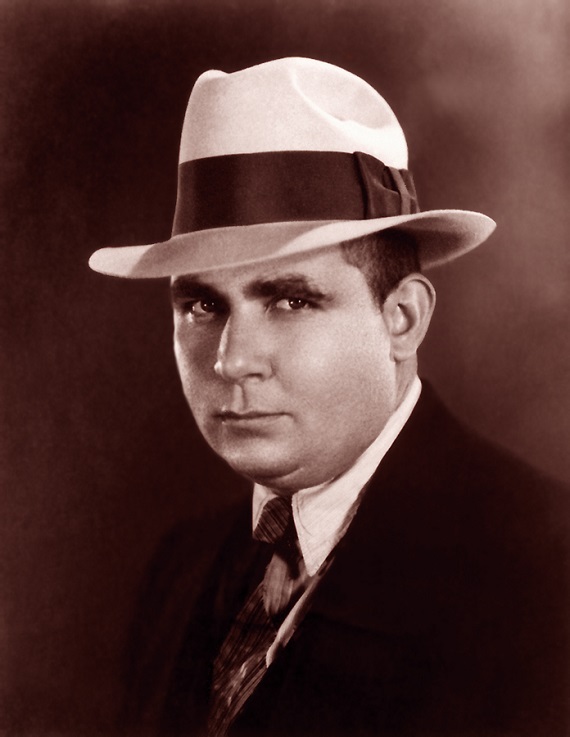
Robert E. Howard: Southern Writer By Mike C. Tuggle
Another gem by Mike C. Tuggle found at the Abbeville Institute. Mike recently released a fine new novel AZTEC MIDNIGHT. Go to the links and experience the author's excellent writing.
Robert E. Howard: Southern Writer
“The novelist with Christian concerns will find in modern life distortions which are repugnant to him, and his problem will be to make these appear as distortions to an audience which is used to seeing them as natural; and he may well be forced to take ever more violent means to get his vision across to this hostile audience. When you can assume that your audience holds the same beliefs you do, you can relax a little and use more normal ways of talking to it; when you have to assume that it does not, then you have to make your vision apparent by shock — to the hard of hearing you shout, and for the almost blind you draw large and startling figures.” Flannery O’Connor
The Southern Gothic tradition, as pioneered by such writers as William Faulkner and Carson McCullers, as well as O’Connor, is noted for its stinging indictment of modern life. Southern Gothic tales feature shocking violence and criminality committed by bizarre, larger-than-life characters clawing for survival in a society that has broken down. Magical and supernatural forces often intervene in unexpected ways.
This Southern literary form is one that Robert E. Howard, had he lived to see it, would have recognized and possibly enriched with his own contributions. Like fiction from the Southern Gothic tradition, Howard’s stories also arose out of the Southern experience, drawing upon the story-telling traditions of the region, and inspired by local tales of Indian wars and blood feuds. Unlike Southern Gothic tales, which take place in the South, Howard’s earthy, vivid, and heroic tales take place in a mythologized Europe. But like O’Connor, Howard penned memorable tales that also critique modern society in the context of standards and values that are distinctly Southern.
Unfortunately, many judge Howard’s Conan stories as escapist fiction. After all, they are populated with witches, sorcerers, vicious monsters, and scheming beauties. They are also highly entertaining, well-crafted, and bristling with energy. But there’s a dark, brooding worldview that emerges from these vivid tales of swordplay and magic.
Howard, a native Texan, is famous for his series of short stories and novels featuring Conan the Barbarian, a powerful and skilled brawler, pirate, mercenary, and finally, ruler of mythical Aquilonia. One of the real-life colorful characters who inspired the young writer was his maternal grandfather, six-foot-one, gray-eyed George Ervin. “Colonel” Ervin was a Confederate veteran born in North Carolina who was living in Mississippi when war broke out. Ervin possessed what Mary Boykin Chesnut famously described as “the red-hot Southern martial spirit.” As Howard scholar Damon C. Sasser observes:
Howard had a profound admiration for his grandfather’s exploits, a Confederate veteran, a man who “rode for four years with Bedford Forrest,” “was accounted the strongest man in his regiment and one of the strongest men in Forrest’s command. He could cleave a man from shoulder to waist with a single stroke of his saber,” [he] “loaned money, dealt some in cattle; he bought a sheep ranch, but, in the midst of a cattle country, with hired men running it, it was not a success. He wandered over into western New Mexico and worked a silver mine not far from the Arizona line” where “old chief Geronimo once stole a bunch of [his] horses.”Howard’s grandfather not only lived an adventurous life, but tasted both success and tragic failure. In one of Howard’s finest Conan stories, Beyond the Black River, one can hear “Colonel” Ervin’s life story echoed in Conan’s comment, “I’ve been a mercenary captain, a corsair, a kozak, a penniless vagabond, a general — hell, I’ve been everything except a king, and I may be that, before I die.”
In addition to his larger-than-life grandfather, Howard also drew inspiration from his Anglo-Celtic heritage. Tales of Celtic warfare fired his imagination, and certainly planted the seeds of the future exploits of Conan and other characters. In a letter to fellow author H.P. Lovecraft, Howard wrote:
Books dealing on Scottish history were easier for me to obtain than those dealing with Irish history, so in my childhood I knew infinitely more about Scottish history and legendry than Irish. I had a distinct Scottish patriotism, and liked nothing better than reading about the Scotch and English wars. I enacted these wars in my games and galloped full tilt through the mesquite on a bare-backed racing mare, hewing right and left with a Mexican machete and slicing off cactus pears which I pretended were the heads of English knights.Howard’s Conan stories portray a hero who is an honest, fierce, manly, and incorruptible barbarian who cannot comprehend the soft, cynical, self-doubting, and decadent city dwellers he often has to rescue. Conan’s attitude toward “civilization” and “progress” reflected Howard’s own views, formed by Howard’s childhood in a series of oil boomtowns his family moved to within the first eleven years of his life. The frenetic and seedy climate of city life, bred from quick wealth and unbridled industrialism, led Howard to see all cities as hotbeds of enervating luxury, corruption, and degeneracy.
The heroes of the past, including his cowboy and ex-soldier grandfather, stood out in Howard’s mind as brave but lonely figures standing in defiance against the living death of a civilization in decline. In a 1931 letter to Lovecraft, Howard confessed that his imagination was an escape from the money-obsessed society he felt trapped in:
I have lived in the Southwest all my life, yet most of my dreams are laid in cold, giant lands of icy wastes and gloomy skies, and of wild, windswept fens and wilderness over which sweep great sea-winds, and which are inhabited by shock-headed savages with light fierce eyes. Always I am the barbarian, the skin-clad, tousle-haired, light-eyed wild man, armed with a rude axe or sword, fighting the elements and wild beasts, or grappling with armored hosts marching with the tread of civilized discipline, from fallow fruitful lands and walled cities. This is reflected in my writings, too, for when I begin a tale of old times, I always find myself instinctively arrayed on the side of the barbarian, against the powers of organized civilization.Howard regarded the “powers of organized civilization” as flattening, ruthless, and tyrannical. In the foreword to Bran Mak Morn, Howard revealed himself as “an instinctive enemy of Rome,” and that his hero Bran Mak Morn, a fearless Pict chieftain, was “merely the symbol of my own antagonism toward the empire.” In Hour of the Dragon, Conan, having lost the throne of Aquilonia in a coup led by an evil sorcerer, rejects a supporter’s offer to return him to power by helping him conquer other lands:
“Let others dream imperial dreams. I but wish to hold what is mine. I have no desire to rule an empire welded together by blood and fire. It’s one thing to seize a throne with the aid of its subjects and rule them with their consent. It’s another to subjugate a foreign realm and rule it by fear.”It’s easy to imagine Grandpa Ervin, who was once held as a prisoner of war by the invading Yankee army, agreeing with such sentiments.
Robert E. Howard harbored the Southerner’s respect for nature and the undying influence exerted by the land of one’s birth. In another lengthy and articulate letter to H.P. Lovecraft, Howard wrote:
Man is greatly molded by his surroundings. I believe, for instance, that the gloominess in my own nature can be partly traced to the surroundings of a locality in which I spent part of my baby-hood. It was a long, narrow valley, lonesome and isolated, up in the Palo Pinto hill country. It was very sparsely settled and its name, Dark Valley, was highly descriptive. So high were the ridges, so thick and tall the oak trees that it was shadowy even in the daytime, and at night it was as dark as a pine forest – and nothing is darker in this world. The creatures of the night whispered and called to one another, faint night-winds murmured through the leaves and now and then among the slightly waving branches could be glimpsed the gleam of a distant star. Surely, the silence, the brooding loneliness, the shadowy mysticism of that lonesome valley entered in some part into my vague-forming nature. At the mouth of the valley stood a deserted and decaying cabin in which a cold-blooded and midnight murder had taken place; owls called weirdly about its ruins in the moonlight, and bats flitted about it in the twilight.Like his creator, Conan had only contempt for those who resorted to shady dealings and political intrigue to acquire what they wanted in life. Conan lived by a strict code of honor, even when stealing from the rich and powerful. Conan might commandeer a poor fisherman’s boat in an emergency, as he did in Hour of the Dragon, but made sure the man received “a helmet full of gold” in return. That code also required him to assist those in peril, even when doing so placed him in danger, which it did on numerous occasions. Most important, Conan remained loyal to those he considered his friends. Those who did not share his code he brusquely ignored; those who ran afoul of that code were dealt with accordingly. In Queen of the Black Coast, Conan tries patiently to explain to a judge why he could not testify against a comrade in arms. But a barbarian’s patience only goes so far:
“Well, last night in a tavern, a captain in the king’s guard offered violence to the sweetheart of a young soldier, who naturally ran him through. But it seems there is some cursed law against killing guardsmen, and the boy and his girl fled away. It was bruited about that I was seen with them, and so today I was haled into court, and a judge asked me where the lad had gone. I replied that since he was a friend of mine, I could not betray him. Then the court waxed wrath, and the judge talked a great deal about my duty to the state, and society, and other things I did not understand, and bade me tell where my friend had flown. By this time I was becoming wrathful myself, for I had explained my position.A natural aristocrat living, fighting, and enjoying life as best he could in a doomed world, Conan often reacted vigorously to attacks, whether on his person or his honor. In The Tower of the Elephant, Conan observed, “Civilized men are more discourteous than savages because they know they can be impolite without having their skulls split.” If they could have gotten their hands on the stories of Robert E. Howard’s rugged and proud hero, John Randolph and Preston Brooks would have approved.
“But I choked my ire and held my peace, and the judge squalled that I had shown contempt for the court, and that I should be hurled into a dungeon to rot until I betrayed my friend. So then, seeing they were all mad, I drew my sword and cleft the judge’s skull; then I cut my way out of the court, and seeing the high constable’s stallion tied near by, I rode for the wharfs, where I thought to find a ship bound for foreign parts.”
Tuesday, December 30, 2014
New Book Release - AZTEC MIDNIGHT by M.C. Tuggle
From the dedicated and unwavering Old Rebel comes the release of his new novella. Long considered a daily must read around these parts, I highly recommend a yarn from a authentic southern thinker and writer. Here is a sample of what to expect from this new work Aztec Midnight:
Aztec Midnight is published by The Novel Fox, and is available
at Amazon, Apple iTunes, Barnes & Noble, Kobo, and Google
Books.
Charlotte, NC--December 26, 2014. “They’re
coming,” says A.J. Louderback, sheriff of Jackson
County, Texas. And he’s not the only public official warning of the growing
threat of Mexican drug cartels. Senator Jeff Sessions of Alabama and Representative Marsha Blackburn of Tennessee have publicly expressed their concerns about
these cartels expanding their reach into the U.S.
Set against this modern-day background of the growing power
and brazenness of these cartels, the just-released novella Aztec Midnight explores the explosive
combination of Mexican economic woes and American complicity in a gripping tale
Kirkus Reviews says “zips right along from twist to twist,
eventually arriving at a bloody finale.”
Foreward
Reviews
writes that Aztec
Midnight
is “a suspenseful,
driving thriller” that
“amps up the
suspense with well-crafted dialogue and a Mexican drug cartel
subplot.”
North
Carolina
writer M.C. Tuggle based his story on his travels to Mexico, his
encounter with the Mexican military, and interviews with the inhabitants of the
Mexican village where he researched his story. Aztec Midnight
is the fast-paced tale of Jonathan Barrrett, an American expert in pre-Columbian
weapons, who journeys to
Cuernavaca with
his wife Susanna at the request of Eric Winwood, a high-ranking State Department
official. Barrett’s mission is to find and rescue the sacred knife of Aztec
emperor Ahuitzotl before the cartels can claim it. Locating the knife proves
more challenging and dangerous than Dr. Barrett anticipated, and he and Susanna
soon find themselves at the center of the cartels’ search. For Dr. Barrett and
his wife to survive, he will be forced to apply his knowledge of ancient weapons
in the face of an ancient power he never imagined.
Tito
Perdue,
the acclaimed author of Lee
and Fields of
Asphodel, calls
Tuggle an “author
who knows something about drug cartels, about the lure of artifacts (magic ones
especially), and about the derring-do of academical people when pushed to the
wall. Who knows how to write clearly and design a suspenseful plot.”
ISBN
978-1-68042-002-9
The Novel
Fox
P.O.
Box 310458, Miami, Florida 33231
http://www.thenovelfox.com/
About The Author:
About The Author:
M.C. Tuggle’s fantasy, science
fiction, and literary stories have been featured in Kzine, Bewildering
Stories, Mystic Signals, Fabula Argentea, and Fiction 365. In addition
to fantasy, science fiction, and crime novels, he enjoys reading
history, with an emphasis on military history, and has given
presentations on Stonewall Jackson's Valley Campaign to several
historical societies. An avid weightlifter, tennis player, collector of
American Indian relics, and student of martial arts.
Please check out his new work and help support a True Brother Of Liberty.
Monday, December 15, 2014

Subscribe to:
Posts (Atom)